
Rendering, Roughcasting & Harling in Falkirk
Harling, roughcasting, wet dash and external render across Falkirk and Central Scotland, on houses that were built for this weather. Cracked or blown harling repaired before it starts letting water through to the wall inside, and full re-renders timed for a stretch of weather that will actually let them cure.
Rather talk? 07821 809043 or WhatsApp (opens in new tab)
Get a free quote
Tell us what needs doing and you will get a price back. No charge and no pressure.
The work
What is actually involved
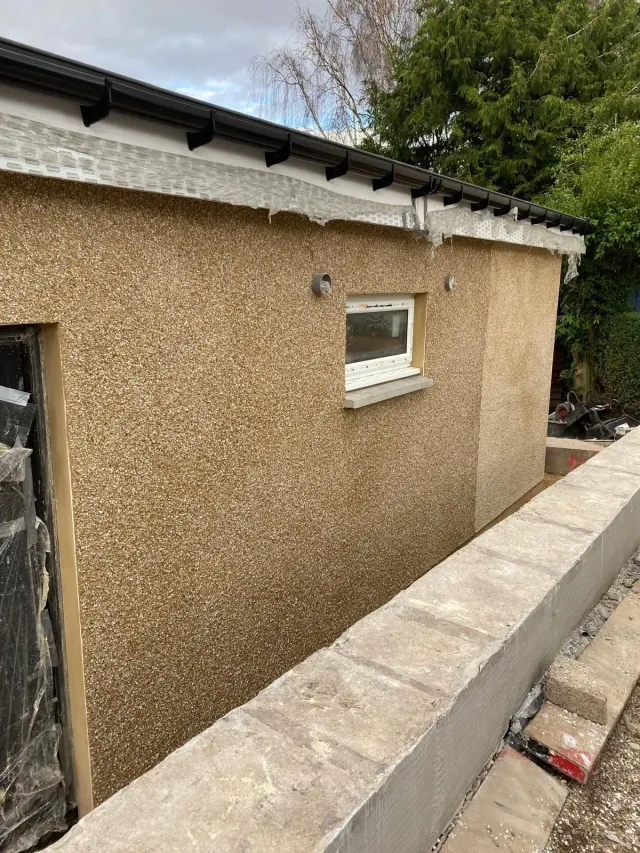
Harling and roughcasting, the traditional Scottish finishes, thrown onto the wall rather than trowelled flat. It is what most older property around here was built with, and matching it matters if you are patching rather than doing the whole elevation.
Wet dash and dry dash, depending on what is already there and what the wall needs.
Smooth and textured render on newer properties and extensions, including where a new build needs to sit alongside an older harled wall.
Repairs to failed sections, where harling has come away from the wall in patches and is letting water behind the rest of it.
Cracked render cut out and made good, so the crack stops travelling.
Making good around new windows, doors and flues where the opening has been altered.
Sound familiar?
When you need rendering & harling
If any of these describe your place, this is the job you are looking for.
Harling is coming away from the wall, or sounds hollow when you tap it
Cracks have opened up and are getting longer
Damp is showing inside on an external wall
Staining, green growth or blown patches are spoiling the frontage
New windows have gone in and the reveals need making good
The house looks tired and the render is the reason
Harling, roughcast and wet dash: the same family, different finishes
If you live in an older Central Scotland property, the outside walls are probably harled. Harling is the traditional Scottish external finish, where a wet mix of binder and aggregate is thrown onto the wall rather than trowelled flat. Thrown, not spread: that is the whole distinction, and it is why the surface is rough and hard-wearing instead of smooth.
Roughcasting is the same idea and the words get used interchangeably in practice. Wet dash describes throwing the aggregate on already mixed into the wet material. Dry dash means the aggregate is thrown onto a wet coat and sticks into it. They look different close up and they weather differently, and matching the existing one matters enormously if you are repairing a section rather than doing a whole elevation.
Get the match wrong and the repair reads as a patch from the pavement forever.
Why Scottish houses were built this way
Harling is not decoration. It is a weather coat. A rough, thrown surface sheds driving rain far better than a flat one, because water runs off the texture rather than sitting on it and finding its way in. That is why it is everywhere from Falkirk to the coast, and why it is still the right answer on the same buildings today.
It also means a failing harl is not a cosmetic problem. Once water gets behind the finish it stays there, and the damage moves inward: damp on the inside face, blown plaster, and eventually the timber. A wall that looks tired is one thing. A wall that sounds hollow when you tap it is water already behind it.
The season is part of the quote
This is the part almost nobody tells you, and it is worth knowing before you start ringing round.
External render and harling need temperature to cure. Below roughly five degrees, and falling, the mix does not gain strength properly. If it then freezes before it has cured, the finish is compromised whether or not it looks fine at the time. It will fail, usually within a couple of winters, and it will fail across the whole elevation rather than in one convenient patch.
In practice that means the season in Central Scotland runs from roughly March to October, with the shoulder months depending entirely on the actual forecast rather than the calendar. Rain matters too: a fresh coat needs to be protected from being washed while it is still green.
So if someone offers to harl your house in January, that is not keenness. We would rather move a job into spring than throw it on and watch it come off.
What that means if you are planning work
- Book exterior work with the season in mind, not the week you decided to do it
- Autumn enquiries are usually next-spring jobs, and that is normal
- Interior work carries on year round, so a full renovation can sequence the inside over winter and the outside after
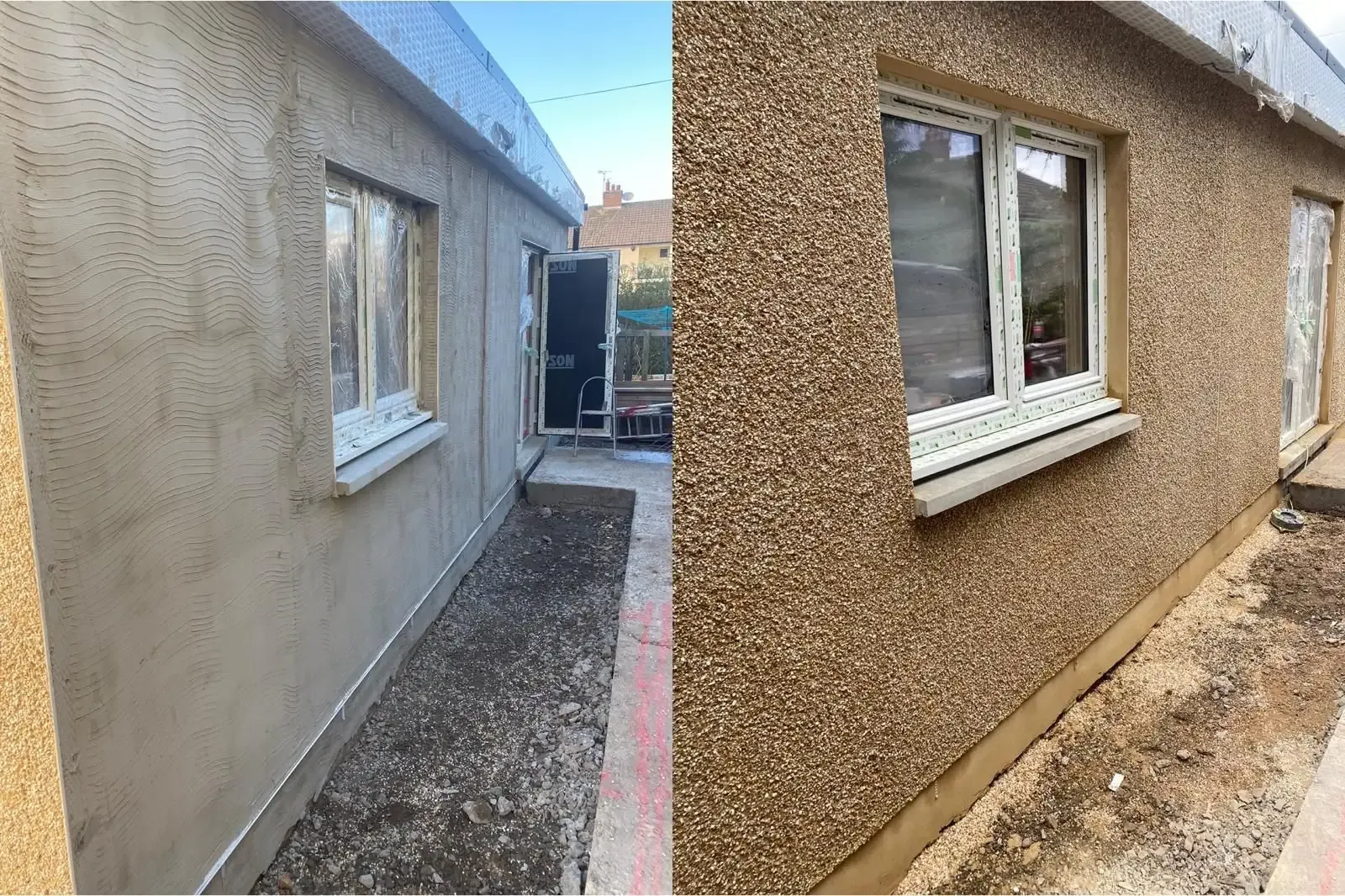
Repair or redo?
A small area of blown harling can be cut out and made good. Once a wall is failing in several places, patches stop being the cheaper option, because you pay for access and setup each time and the finish never quite disappears.
The honest test is how much has let go and why. If three patches have blown near a downpipe, the downpipe is the problem and fixing the render alone is money spent twice. Before quoting we look at what is putting water into the wall: gutters, cracked cills, a bridged damp course, ground levels built up above it. Sorting the cause first is often the difference between a repair that lasts twenty years and one that lasts two.
For internal damage caused by a failing external wall, see plaster repairs. If the wall is sound and it is only the inside surface that has had it, wall skimming is the job you need. There is recent work to look through, and we harl and render across every town on this list, from Falkirk out to Edinburgh and Glasgow.
Our work
Rendering, roughcasting and harling we have done
Real jobs in real houses across the area. Fresh plaster looks pink or brown until it dries out.
Our process
How the job actually runs
External work is weather dependent in a way interior work is not, so timing is part of the quote. Here is how a job runs.
No competitor publishes this, which tells you how often people are left guessing.
-
Survey
We come out and look at the job properly. Measuring up, checking what is behind the existing surface, and asking what you want the finished room to do.
-
Written quote
You get the price in writing with the work set out line by line. If anything could change it once we open the surface up, you hear about it before we start rather than after.
-
Prep and protection
Floors covered, furniture sheeted or moved out, doorways sealed. Plastering makes dust, and the difference between a tidy job and a mess is decided before any material is mixed.
-
The work
Boarding, bonding and finish coats worked in order, each one given the time it needs. You will know which rooms are in use and which are not on any given day.
-
Drying time
Fresh plaster has to dry before it can be painted. We tell you roughly how long to leave it, what it should look like as it goes off, and what to do if it dries patchy.
-
Clean up
Waste taken away, floors vacuumed, everything put back. The job is not finished when the plastering stops, it is finished when you have got your room back.
FAQs
Questions people ask
What is harling?
Harling is the traditional Scottish external wall finish, where a wet mix of lime or cement and aggregate is thrown onto the wall rather than trowelled smooth. It leaves a rough, hard-wearing surface that sheds rain well, which is why so much older Scottish property has it.
Can render be done in winter?
Not in a frost. External render and harling need temperatures above about five degrees and rising, and they need time to cure before any freeze. In Central Scotland that usually means the season runs roughly March to October. We would rather move a job than throw it on and watch it fail.
Do I need the whole wall redone, or just the bad patch?
Depends how much has failed and how well a patch will match. A small area of blown harling can be cut out and made good. Once a wall is failing in several places the patches stop being cheaper, and they never quite disappear. We will tell you which one you are looking at.
How long does harling last?
Done properly on a sound wall, decades. What shortens it is water getting behind it, usually through a crack, a failed gutter or a bridged damp course. That is why the first thing worth checking on a failing wall is not the render itself but what is letting water in behind it.
Related work
Plaster Repairs
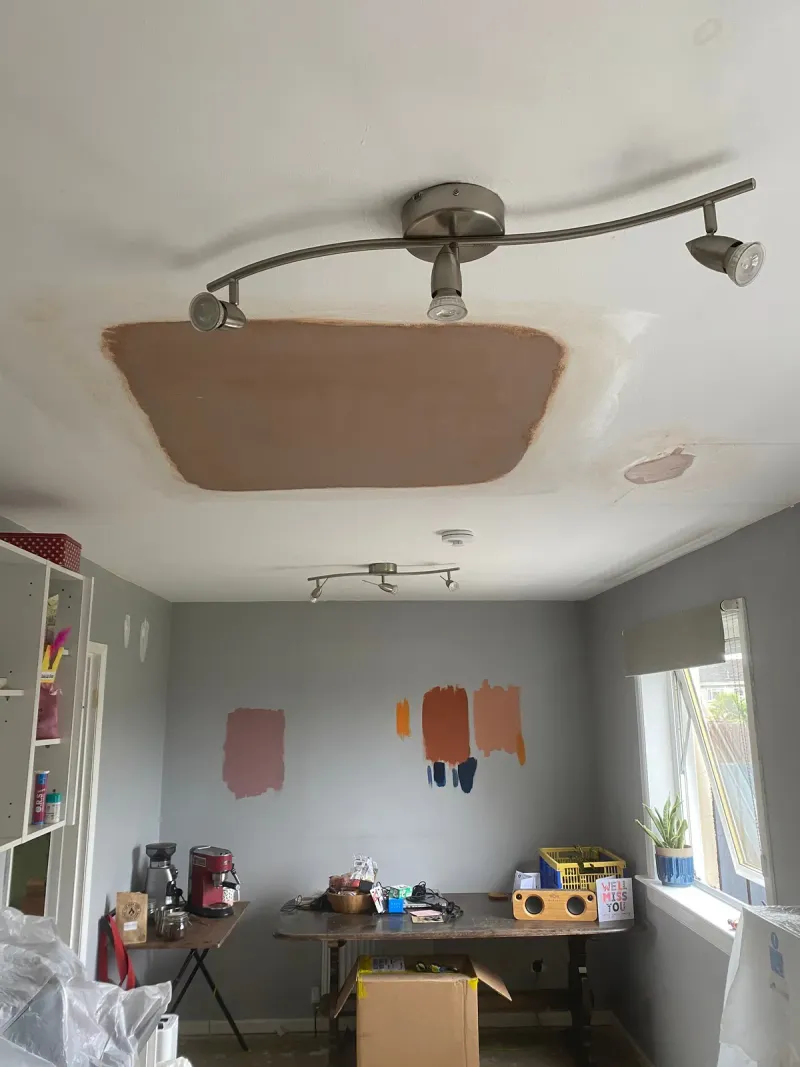
Cracks, holes, blown and hollow plaster and damp-damaged sections patched and made invisible. No job too small.
Plaster Repairs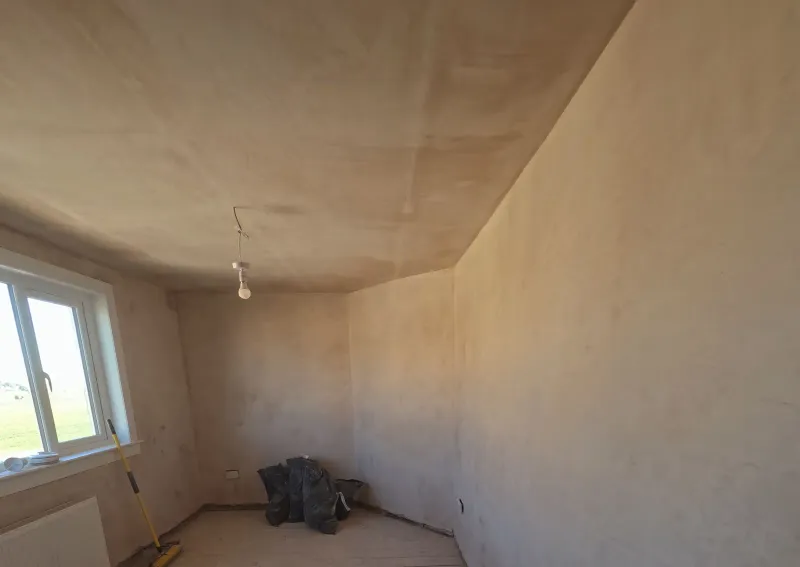
Plastering & Skimming
Skimming over existing walls, fresh plaster onto new board, and re-skimming tired surfaces to leave a flat finish ready for paint.
Plastering & Skimming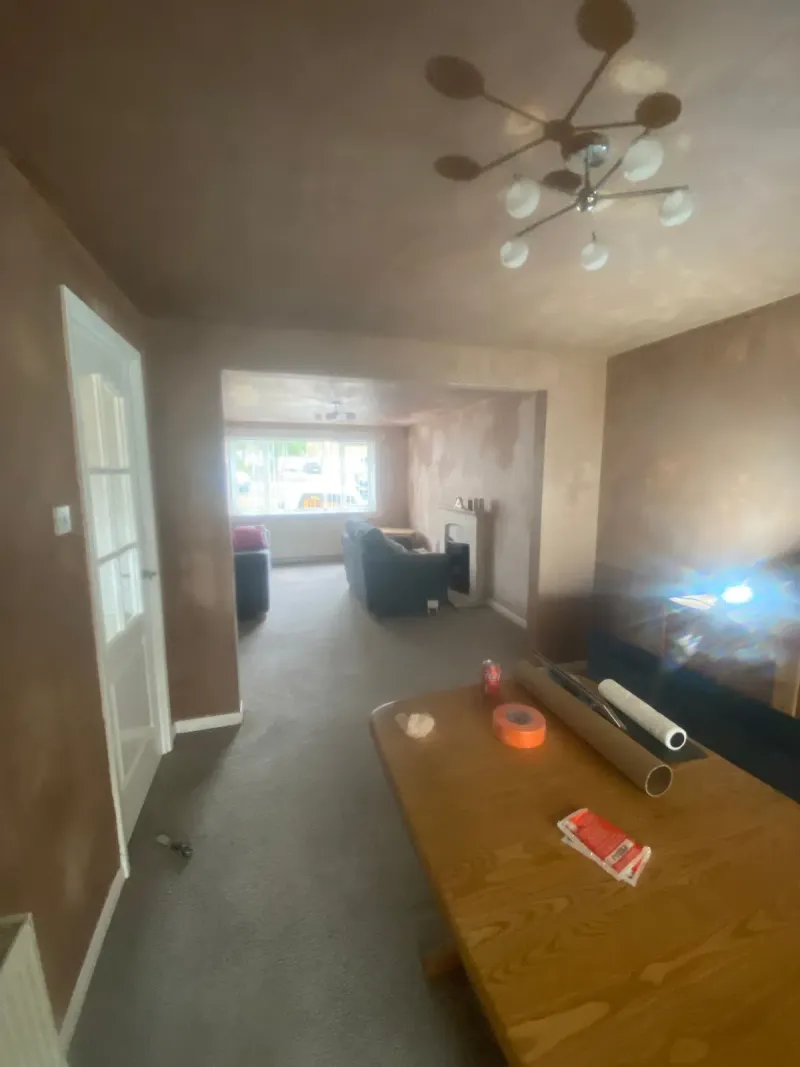
Artex Ceilings
Dated textured ceilings covered over and finished smooth, either overboarded or skimmed, ready for decorating.
Artex Ceilings
Need a plasterer in Falkirk?
Send over what needs doing, with a photo if you have one, and you will get a price back. No charge for the quote and no pressure after it.
Rather talk? 07821 809043 or WhatsApp (opens in new tab)