
Artex Ceilings Covered & Smoothed in Falkirk
That swirled, stippled or combed artex ceiling covered over and finished flat, across Falkirk and Central Scotland. Skimmed straight over or overboarded first, both of which leave the artex undisturbed. We do not remove it, and if you are unsure whether yours contains asbestos we can take a sample and confirm within one to two days.
Rather talk? 07821 809043 or WhatsApp (opens in new tab)
Get a free quote
Tell us what needs doing and you will get a price back. No charge and no pressure.
The work
What is actually involved
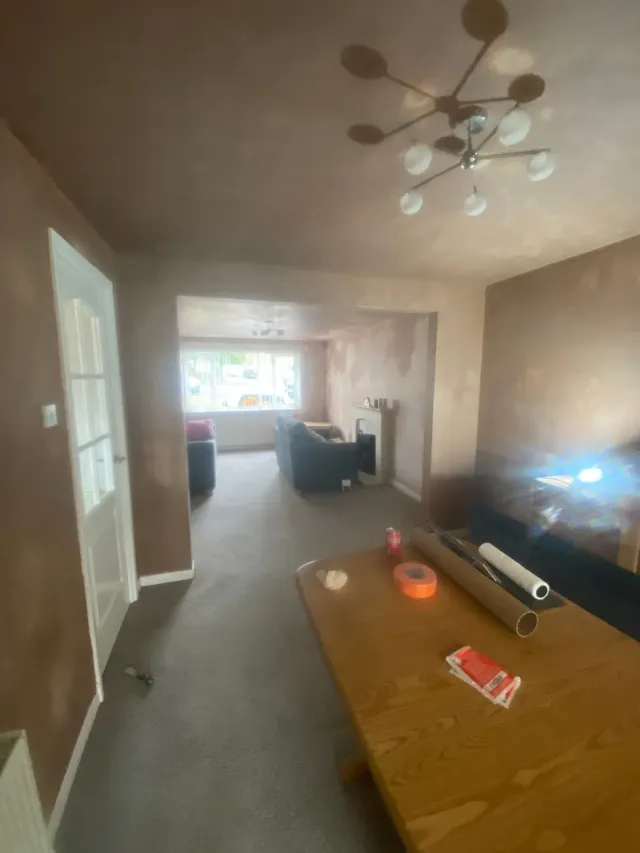
Skimming straight over the artex, where the texture is shallow enough and the ceiling is sound. The quickest route to a flat ceiling and the one most people end up with.
Overboarding, where new plasterboard goes up underneath the artex and is then skimmed. Better for heavy texture, and it leaves the artex completely undisturbed.
Walls as well as ceilings, since artex turned up on both in a lot of houses.
Making good afterwards, including the wall and ceiling join and around light fittings, roses and coving.
Honest advice on which of the two routes your ceiling actually needs, rather than the one that suits us.
Sound familiar?
When you need an artex ceiling covered
If any of these describe your place, this is the job you are looking for.
The textured ceiling is dating the whole room
You are decorating and the artex is the thing stopping it looking finished
You are selling, and artex reads as "job to do" to a buyer
The pattern is catching dust and cobwebs and cannot be cleaned properly
You have been told the artex might contain asbestos and you do not know what to do next
People search for the ceiling, not the service
Almost nobody wakes up wanting “artex removal”. They look up at a swirled, stippled or combed ceiling, decide they have had enough of it, and start searching for how to get rid of the pattern. That is the job: making a textured ceiling flat.
There are two honest ways to do that, and neither of them involves taking the artex off.
Skimming over, or overboarding
Skimming over is the quicker route and the one most ceilings end up with. A finish coat goes straight over the texture and is worked flat. It suits shallow patterns, and it leaves you with a smooth ceiling ready to paint in a day or two.
Overboarding means fixing new plasterboard underneath the existing ceiling and skimming that. It is the better answer for deep or heavily combed patterns where a skim would need to be too thick to be reliable, and for ceilings that are sound but uneven.
Both cover the artex. Neither disturbs it. That is not a coincidence, and it is the main reason covering has become the standard approach rather than removal.
The asbestos question, answered plainly
Artex put up before 2000 may contain asbestos. It was added as a binder, it was extremely common, and you cannot tell by looking at it. No amount of squinting at the pattern will give you an answer.
Here is our position, stated clearly because most trade websites simply avoid the subject:
We do not deal with asbestos, and we do not remove artex. Removal is specialist work and there are companies who do exactly that. If you want the artex gone completely rather than covered, that is who you need, and we will point you toward it.
What we do is cover it, which leaves the material undisturbed. Skimming over or overboarding does not sand, scrape or break up the surface, and that is precisely why it is the route most people take.
If you are unsure, we can find out. We can take a sample and confirm within one to two days whether it contains asbestos. It costs very little and it settles the question before you commit to anything. Plenty of people have been putting the job off for years because nobody would give them a straight answer about it.
Not one of the plastering companies we looked at across Falkirk, Edinburgh and Glasgow mentions asbestos anywhere on their website. It is the single most common worry about this job and the industry mostly pretends it is not there.
Walls as well as ceilings
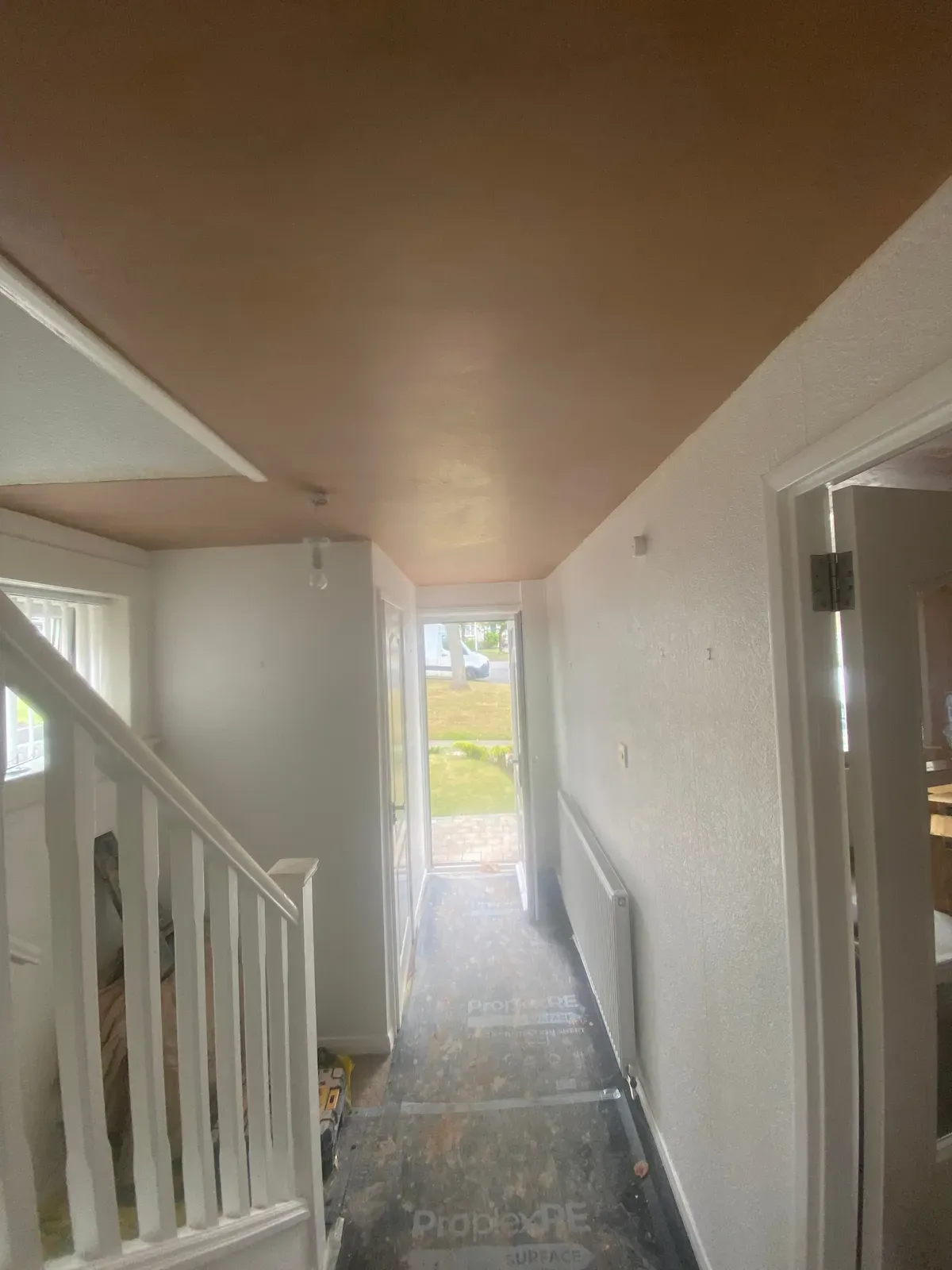
Artex turned up on walls in plenty of houses, usually in hallways and stairwells where it was sold as hard-wearing. The same two options apply, and the same logic: cover rather than disturb.
Stairwells are worth mentioning separately because access is the awkward part. Working over a staircase needs proper staging rather than a ladder balanced on a step, and it is the reason some quotes come back higher for what looks like a small area.
After the artex is covered
You get a flat ceiling ready for decorating. Fresh plaster dries from dark brown to an even pale pink over roughly four to seven days, and it wants a watered-down mist coat first rather than full-strength paint straight on.
Most artex jobs turn into slightly bigger jobs, and that is worth being upfront about. Once one ceiling is flat, the one next door tends to look worse than it did before. If you are thinking about doing the whole upstairs, say so at the quote stage rather than after, because doing them together is considerably less disruptive than doing them one at a time.
If the ceiling underneath is cracked, sagging or lath and plaster, see ceiling plastering and repairs, which covers the structural side. For walls being taken back and finished at the same time, plastering and skimming.
Our work
Artex ceilings we have covered
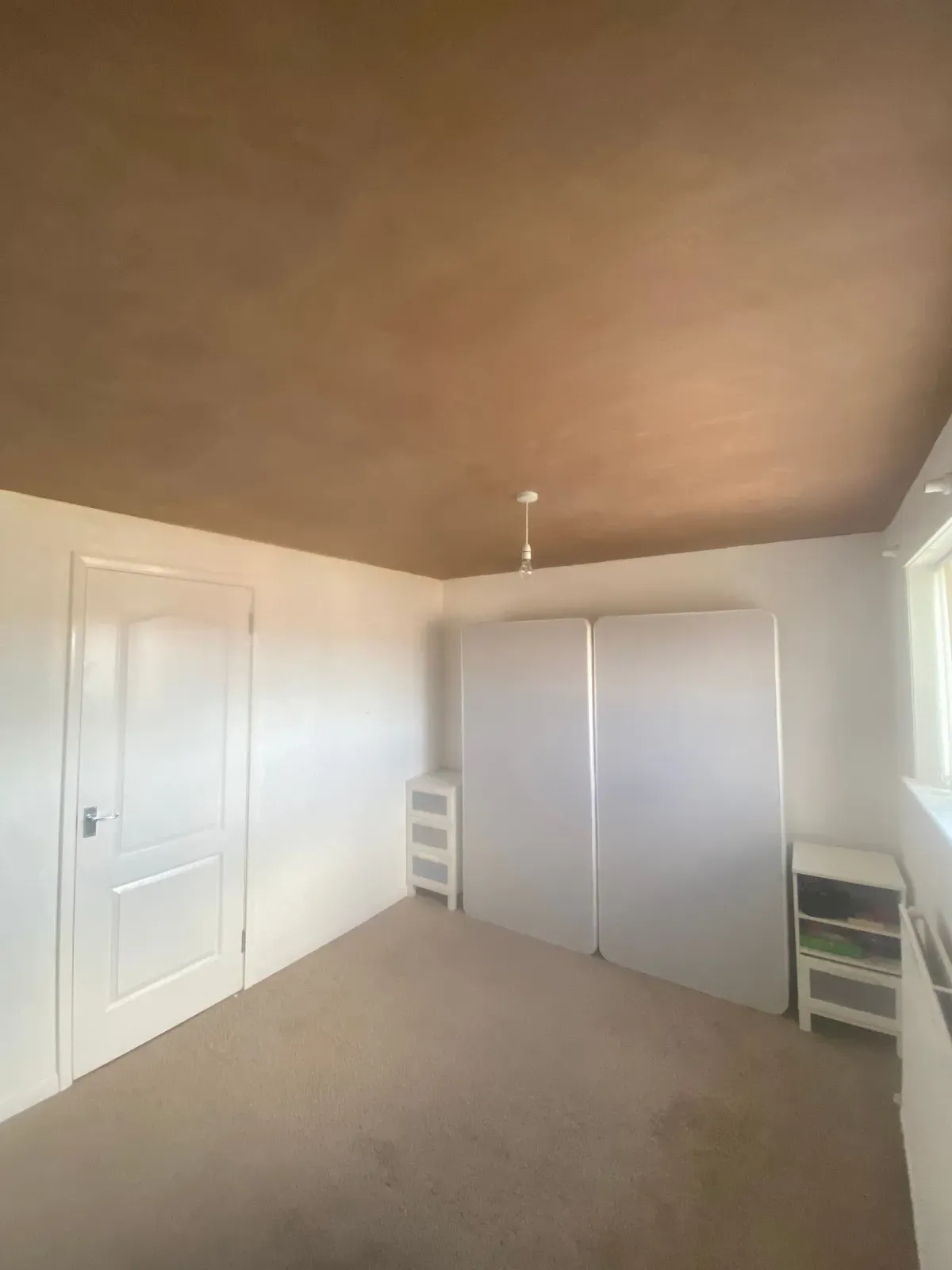
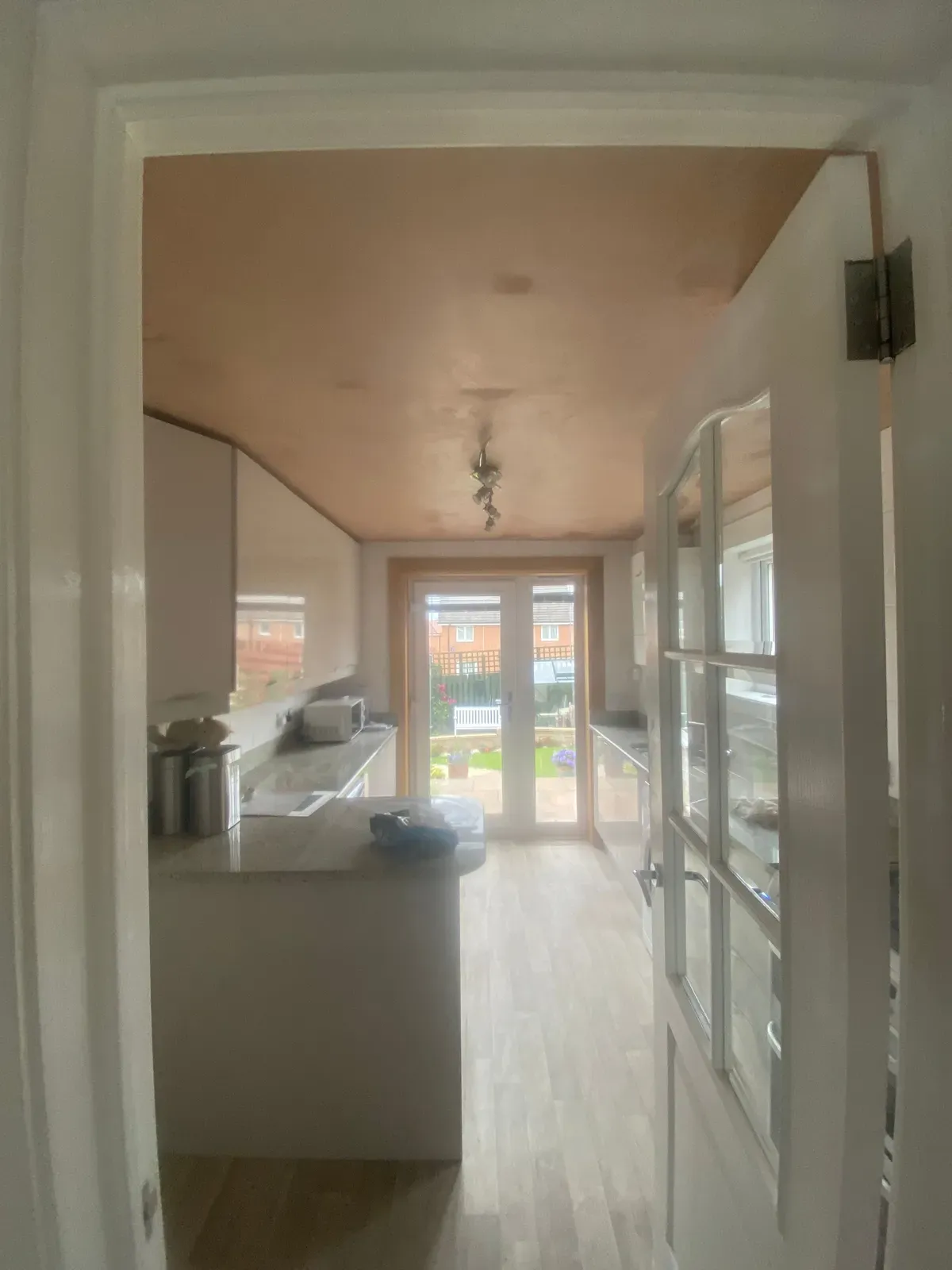
Real jobs in real houses across the area. Fresh plaster looks pink or brown until it dries out.
Before After
Our process
How the job actually runs
Covering artex is usually a one or two day job, and the drying is the long part. Here is how it runs.
No competitor publishes this, which tells you how often people are left guessing.
-
Survey
We come out and look at the job properly. Measuring up, checking what is behind the existing surface, and asking what you want the finished room to do.
-
Written quote
You get the price in writing with the work set out line by line. If anything could change it once we open the surface up, you hear about it before we start rather than after.
-
Prep and protection
Floors covered, furniture sheeted or moved out, doorways sealed. Plastering makes dust, and the difference between a tidy job and a mess is decided before any material is mixed.
-
The work
Boarding, bonding and finish coats worked in order, each one given the time it needs. You will know which rooms are in use and which are not on any given day.
-
Drying time
Fresh plaster has to dry before it can be painted. We tell you roughly how long to leave it, what it should look like as it goes off, and what to do if it dries patchy.
-
Clean up
Waste taken away, floors vacuumed, everything put back. The job is not finished when the plastering stops, it is finished when you have got your room back.
FAQs
Questions people ask
Can you plaster over artex?
Yes, and it is usually the best option. A skim coat goes straight over shallow texture and leaves a flat ceiling ready to paint. Deeper patterns are better overboarded first. Both routes cover the artex rather than removing it, which keeps the material undisturbed.
Do I need to remove artex before skimming?
No. Removal is not necessary to get a flat ceiling, and covering is the more common approach precisely because it leaves the material alone. If you specifically want the artex gone rather than covered, that is a job for an asbestos specialist and not something we take on.
Does my artex contain asbestos?
It might, if it went up before 2000. You cannot tell by looking. If you are unsure and it is worrying you, we can take a sample and confirm within one to two days. Knowing either way costs very little and it settles the question before any work is booked.
Do you remove artex?
No. We do not deal with asbestos, and we do not take artex off. There are specialist companies who do that if you want it away completely. What we do is cover it, by skimming over or overboarding, and we will happily point you in the right direction if removal is what you actually need.
Related work
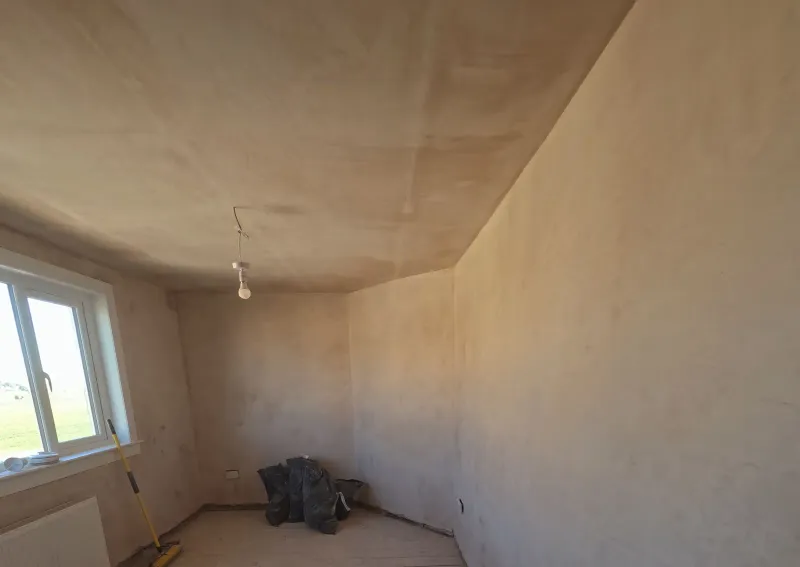
Plastering & Skimming
Skimming over existing walls, fresh plaster onto new board, and re-skimming tired surfaces to leave a flat finish ready for paint.
Plastering & Skimming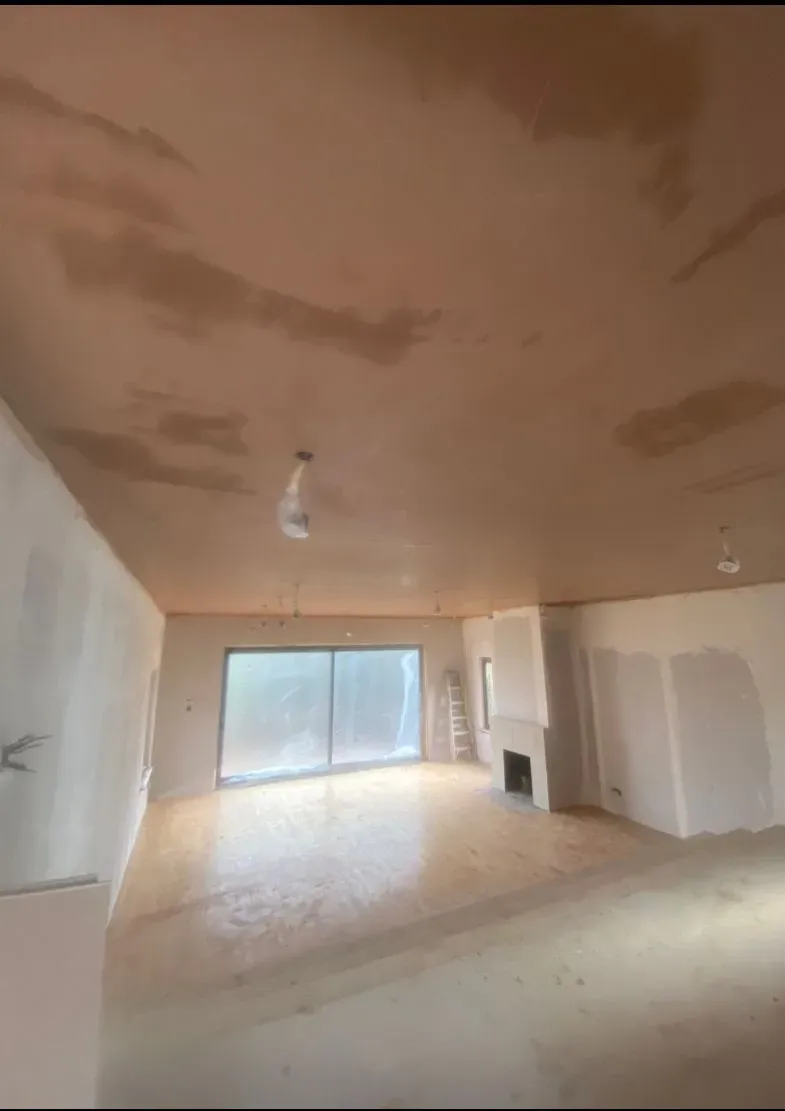
Ceiling Plastering & Repairs
Re-skimming ceilings, repairing lath and plaster, overboarding, and putting right cracked or sagging ceilings in older homes.
Ceiling Plastering & Repairs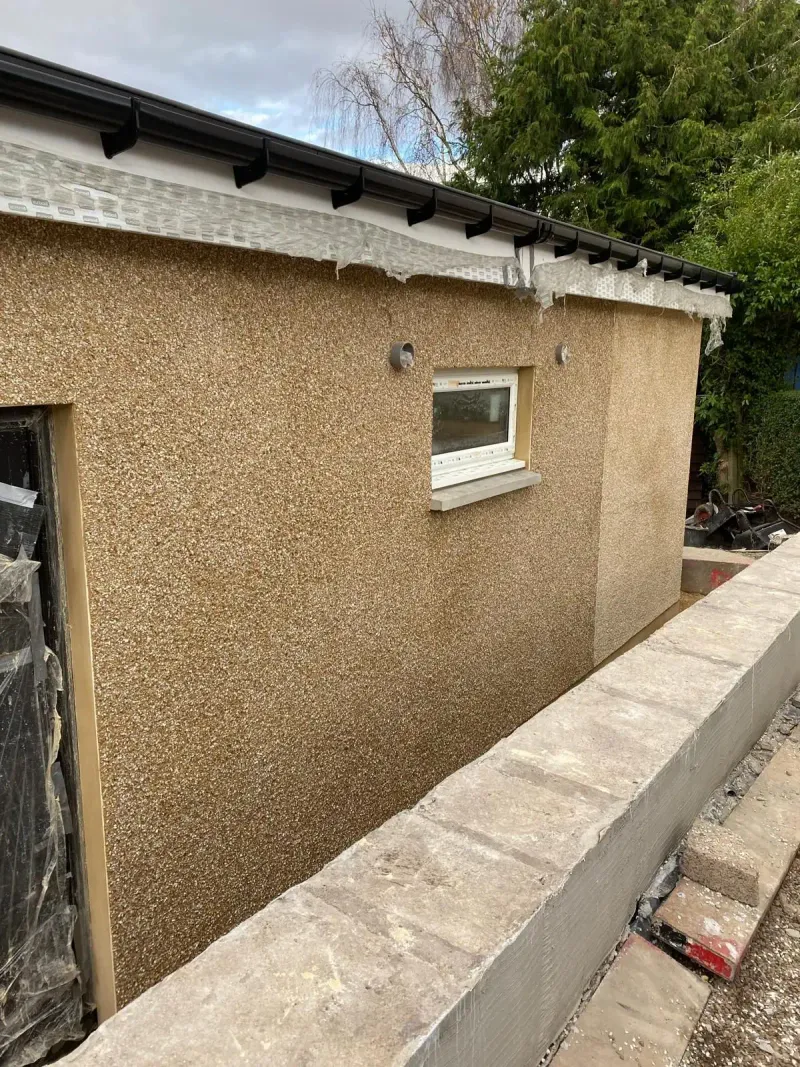
Rendering & Harling
External render, harling and roughcasting, wet dash, and repairs to failed or cracked sections on older Scottish properties.
Rendering & Harling
Need a plasterer in Falkirk?
Send over what needs doing, with a photo if you have one, and you will get a price back. No charge for the quote and no pressure after it.
Rather talk? 07821 809043 or WhatsApp (opens in new tab)