
Plaster Repairs in Falkirk
Cracks, holes, blown plaster and damage after a leak, put right across Falkirk and Central Scotland. No job is too small, and plenty of ours are a single wall or one ceiling. Send a photo and you will get a straight answer on whether it needs a patch, a full wall, or the cause dealing with first.
Rather talk? 07821 809043 or WhatsApp (opens in new tab)
Get a free quote
Tell us what needs doing and you will get a price back. No charge and no pressure.
The work
What is actually involved
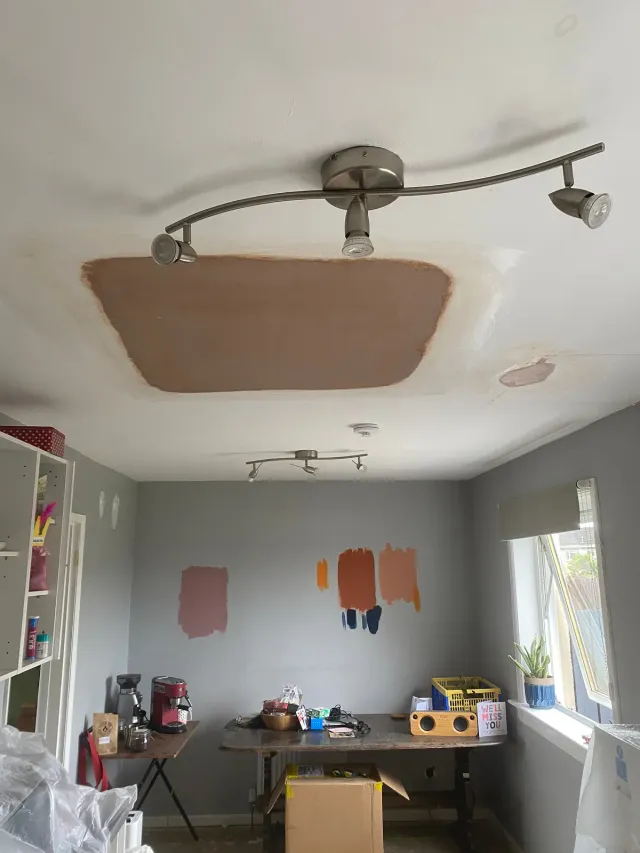
Cracks raked out and filled properly rather than skimmed over. A crack that is only covered will come back through the paint, usually within a year.
Blown and hollow plaster taken off back to sound material. If it sounds hollow when you tap it, the bond has gone and nothing sticks to it.
Holes from removed radiators, fittings, old sockets and fireplaces, filled and finished flush with the surrounding wall.
Damp-damaged sections cut out and replaced once the cause has been dealt with. We will tell you honestly if the damp needs sorting first, because plastering over live damp is money wasted.
Lath and plaster repairs on older Central Scotland properties, where the original ceiling or wall is worth keeping rather than ripping out.
Patch work blended into the existing surface, then the whole wall skimmed if the patch would otherwise show.
Sound familiar?
When you need plaster repairs
If any of these describe your place, this is the job you are looking for.
A crack is getting longer or wider rather than staying put
A section sounds hollow when you tap it
A leak has been fixed and the wall or ceiling underneath is ruined
Something has been taken off the wall and left a hole
Paint keeps flaking or bubbling in the same spot
One patch on an otherwise fine wall is spoiling the room
Most repairs start with a diagnosis, not a trowel
People ring about plaster repairs already worried. A crack has appeared and grown, a patch sounds hollow, or something came off the wall and took half the surface with it. The first useful thing is usually working out what you are actually looking at, because the answer changes what the job is.
Cracks
Most cracks are nothing. Fine hairline cracks are the building moving with the seasons, or old plaster shrinking, and they have been doing it quietly for years.
The ones worth a proper look are cracks that are getting longer or wider, cracks that run diagonally from the corner of a door or window, and cracks that arrive at the same time as a door starting to stick. Those can point at movement rather than surface failure, and plastering over them will not hold.
A crack that is just a crack gets raked out, filled properly and made good. Raked out matters: filler skimmed over the top without opening the crack up first comes back through the paint, usually inside a year.
Blown and hollow plaster
Tap the wall. If it sounds hollow over an area rather than at a single point, the plaster has lost its bond with what is behind it. Nothing sticks reliably to plaster that has already let go, so it comes off back to sound material and gets built back up.
This is very common in older Central Scotland housing, particularly on external walls and in rooms that have been cold or damp for a while.
Damage after a leak
Water damage has a giveaway: stains keep coming back through paint no matter how many coats go on, and the area around them blows.
The leak gets fixed before the plaster does. New plaster over live damp will blow again within months, and the second repair costs exactly what the first one did. We will say so even when it means the job waits, because the alternative is charging you for work we already know is going to fail.
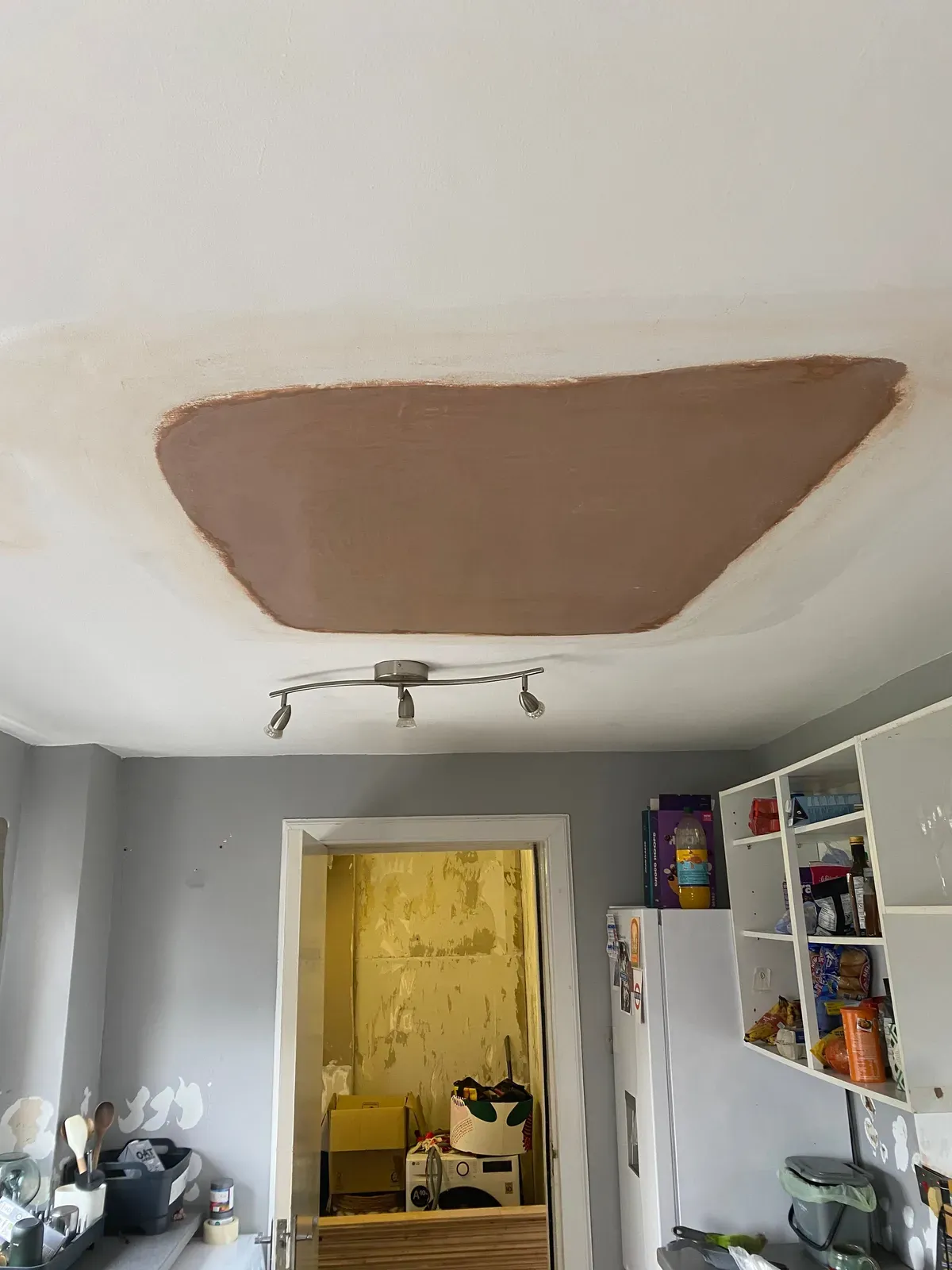
Matching, and when it is not worth chasing
On a patch, matching the surrounding wall is most of the skill: the same suction, the same texture, the same level, blended until the edge disappears.
Sometimes it is not the right answer. If the wall around the patch is very uneven, heavily textured, or has been repaired repeatedly, a perfect patch will still read as a patch, because it will be the flattest thing on the wall. In those cases skimming the full wall costs a little more and looks finished rather than fixed. We will tell you which one your wall needs rather than defaulting to the bigger job.
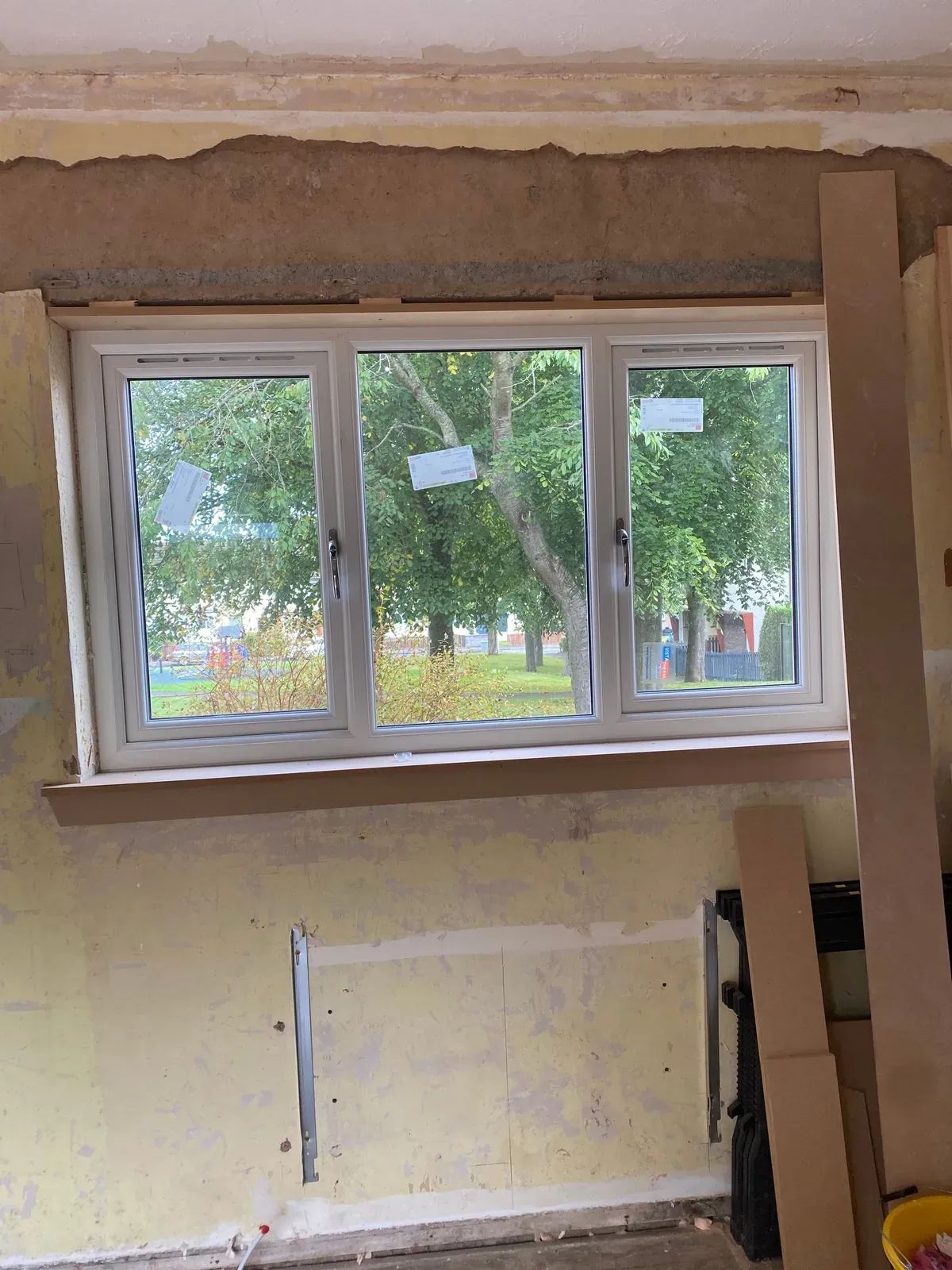
No job too small, and we mean it
A single cracked wall. One ceiling. A hole where a radiator used to be. A patch after the plumber has been.
Plenty of plasterers will not turn out for that, which is exactly why we do. Small repairs are also how most people find out whether they want someone back for the bigger job, so they get the same quote, the same protection and the same finish as a full room.
If the whole wall or room needs doing rather than a section, see plastering and skimming. For ceilings, see ceiling plastering and repairs, and for damage caused by a failing outside wall, rendering and harling.
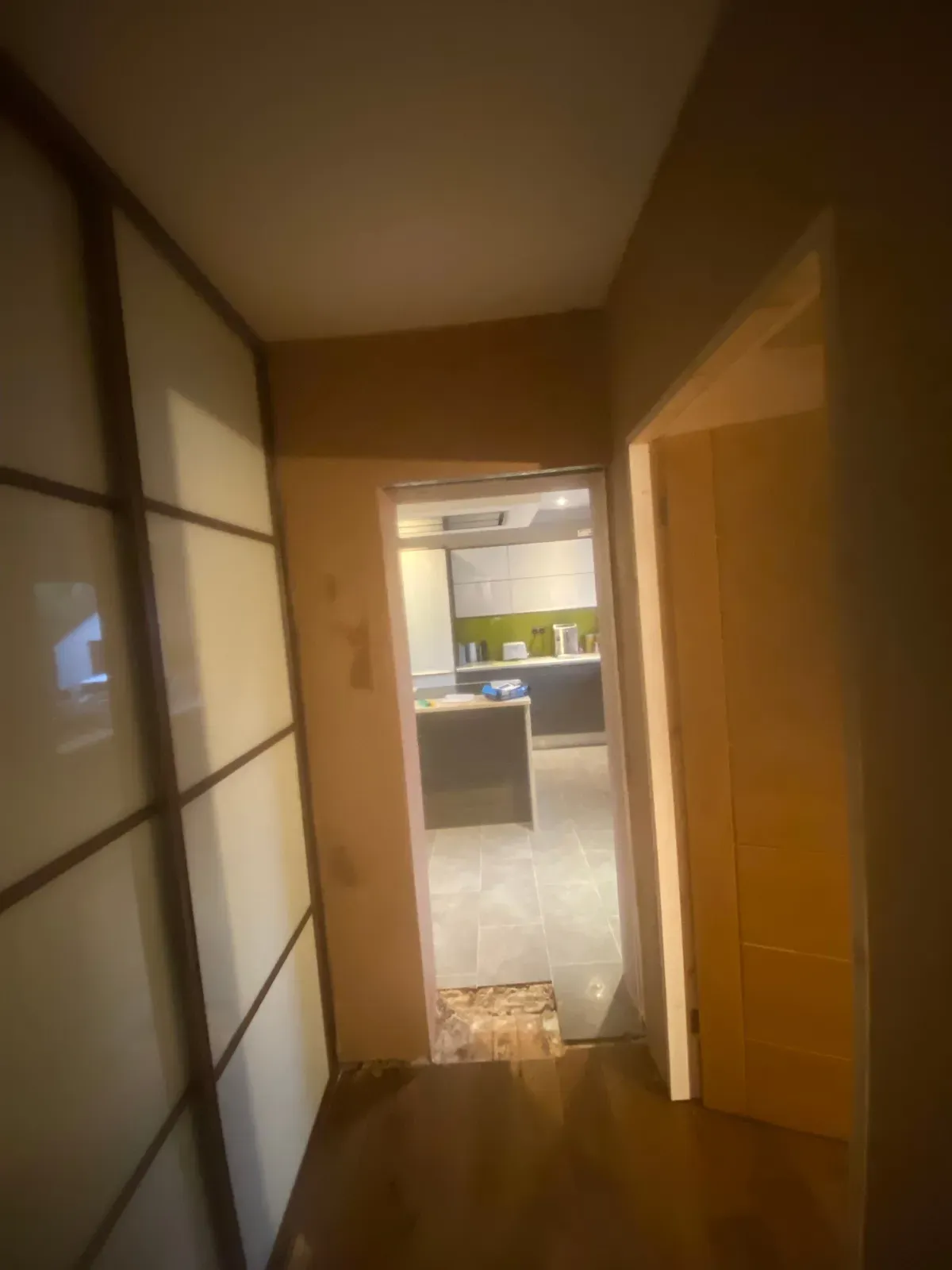
Our work
Plaster Repairs we have done
Real jobs in real houses across the area. Fresh plaster looks pink or brown until it dries out.
Before After
Our process
How the job actually runs
Repairs are usually quicker than a full re-skim, but the same order applies. Here is how a job runs.
No competitor publishes this, which tells you how often people are left guessing.
-
Survey
We come out and look at the job properly. Measuring up, checking what is behind the existing surface, and asking what you want the finished room to do.
-
Written quote
You get the price in writing with the work set out line by line. If anything could change it once we open the surface up, you hear about it before we start rather than after.
-
Prep and protection
Floors covered, furniture sheeted or moved out, doorways sealed. Plastering makes dust, and the difference between a tidy job and a mess is decided before any material is mixed.
-
The work
Boarding, bonding and finish coats worked in order, each one given the time it needs. You will know which rooms are in use and which are not on any given day.
-
Drying time
Fresh plaster has to dry before it can be painted. We tell you roughly how long to leave it, what it should look like as it goes off, and what to do if it dries patchy.
-
Clean up
Waste taken away, floors vacuumed, everything put back. The job is not finished when the plastering stops, it is finished when you have got your room back.
FAQs
Questions people ask
Are cracks in plaster serious?
Most are not. Fine hairline cracks are usually just the building moving with the seasons or old plaster drying out. Worth looking at properly are cracks that keep growing, run diagonally from a corner, or come with a door that has started sticking. Send a photo and we will tell you straight.
Can you match the existing plaster?
On a patch, yes, and that is the whole skill of it. Where the surrounding wall is very uneven or heavily textured, the honest answer is that skimming the full wall gives a better result than chasing a match. We will say which one your wall needs.
Do you do small jobs?
Yes. One wall, one ceiling, one patch after a leak. Plenty of plasterers will not turn out for a single repair, which is exactly why we do. Small jobs are also how most people find out whether they want us back for the bigger one.
Should the damp be fixed first?
Always. New plaster over an active leak or rising damp will blow again, usually within months, and the second repair costs the same as the first. We will tell you if that is what we are looking at, even though it means the job waits.
Related work
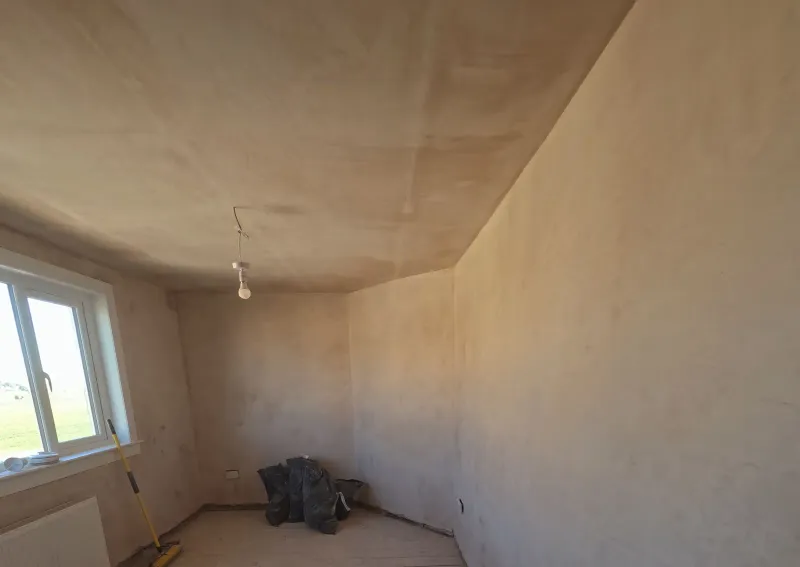
Plastering & Skimming
Skimming over existing walls, fresh plaster onto new board, and re-skimming tired surfaces to leave a flat finish ready for paint.
Plastering & Skimming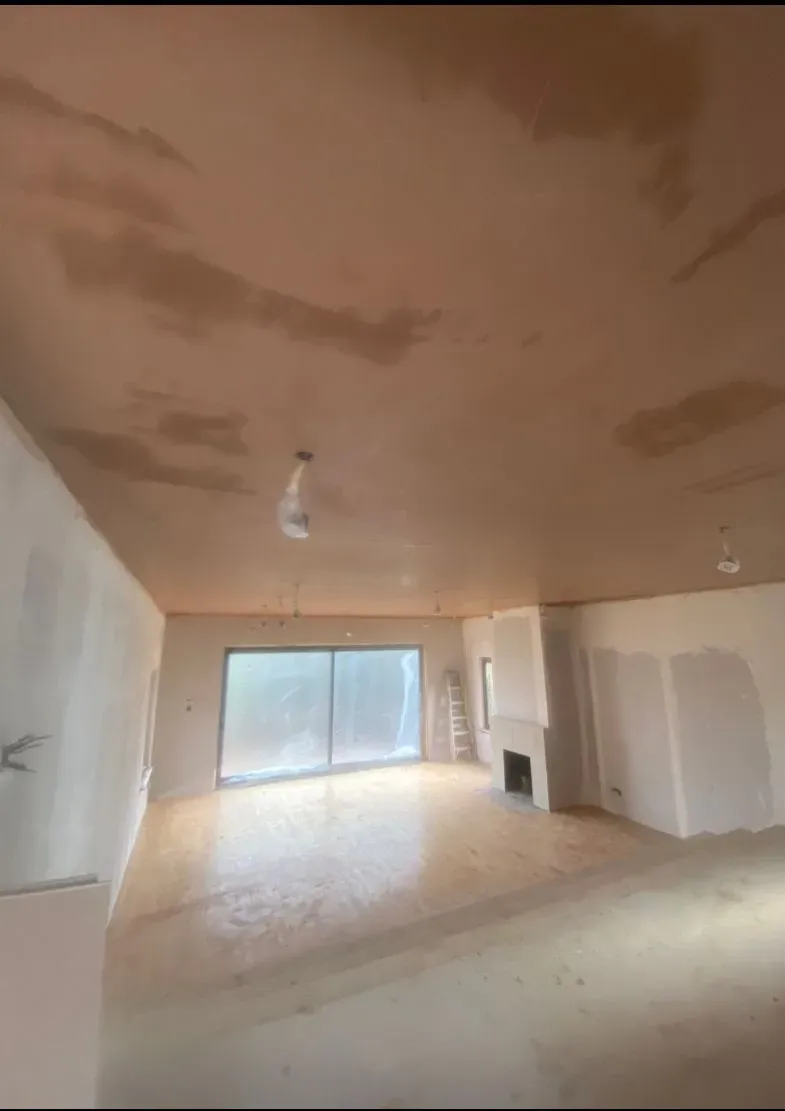
Ceiling Plastering & Repairs
Re-skimming ceilings, repairing lath and plaster, overboarding, and putting right cracked or sagging ceilings in older homes.
Ceiling Plastering & Repairs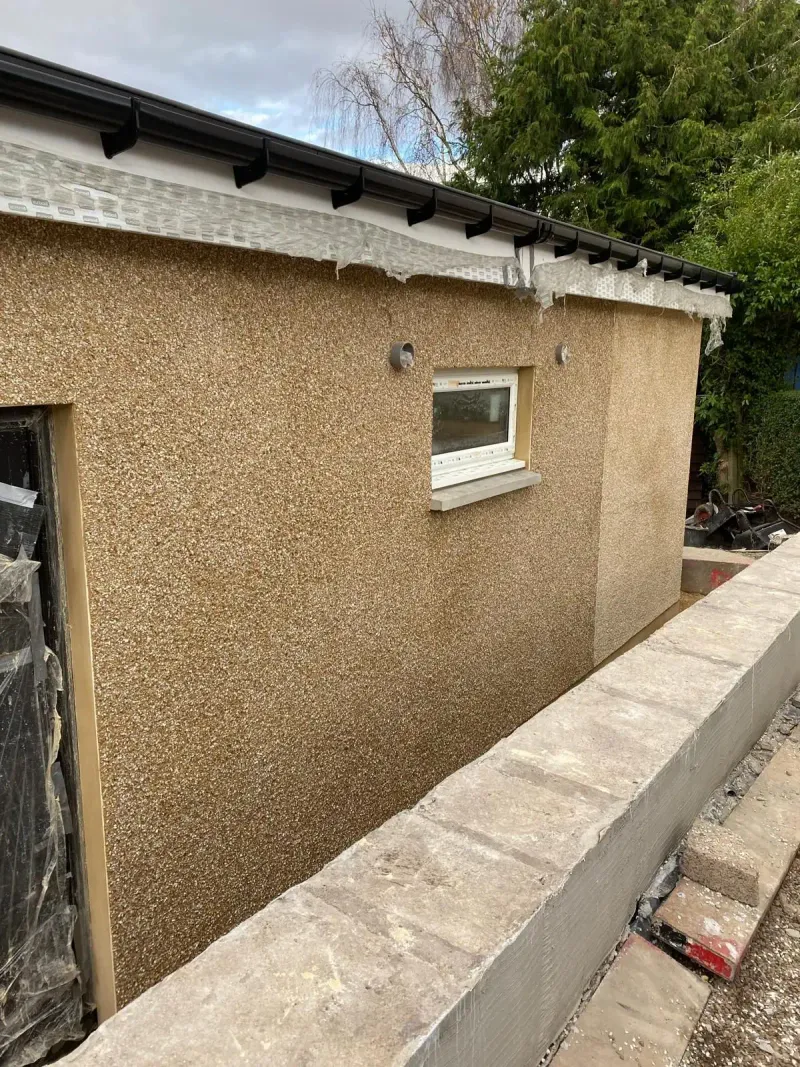
Rendering & Harling
External render, harling and roughcasting, wet dash, and repairs to failed or cracked sections on older Scottish properties.
Rendering & Harling
Need a plasterer in Falkirk?
Send over what needs doing, with a photo if you have one, and you will get a price back. No charge for the quote and no pressure after it.
Rather talk? 07821 809043 or WhatsApp (opens in new tab)