
Plasterboarding & Dry Lining in Falkirk
Dry lining, dot and dab, stud partitions and boarding out across Falkirk and Central Scotland, boarded and skimmed as one job. Insulated board where an external wall is cold, taped and jointed or fully skimmed depending on the finish you want, and one subcontractor to programme instead of two to coordinate.
Rather talk? 07821 809043 or WhatsApp (opens in new tab)
Get a free quote
Tell us what needs doing and you will get a price back. No charge and no pressure.
The work
What is actually involved
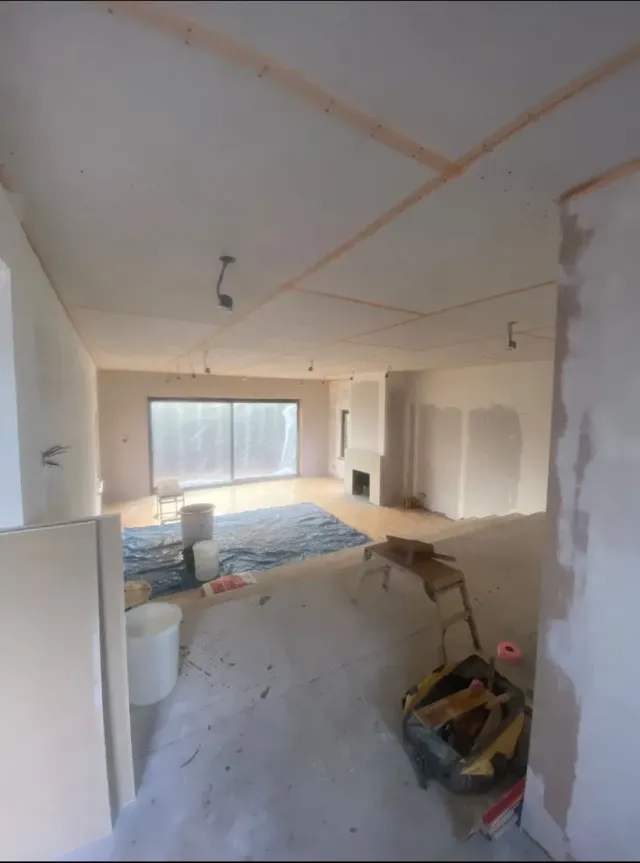
Dot and dab, where plasterboard is bonded straight onto a solid wall. Quick, warm and far less wet than a full plaster, which matters if you are working to a schedule.
Stud partitions built from scratch to split a room, close off an open plan space or form a new cupboard or en suite.
Boarding out lofts, garages and extensions ready for finishing, including the awkward angles and dwarf walls that take the time.
Insulated plasterboard on cold external walls, so the insulation and the finish go on in one pass rather than two trades and two visits.
Taping and jointing where you want a paint-ready finish without a full skim, on new build and commercial work in particular.
Boarded then skimmed as a single job, which is what most domestic customers actually want. One trade, one price, one finish.
Sound familiar?
When you need plasterboarding & dry lining
If any of these describe your place, this is the job you are looking for.
An extension or loft conversion is at first fix and needs boarding
You want to split one room into two, or close off an open plan space
An external wall is cold and you want insulation behind the finish
A solid wall is too uneven to plaster economically, so dry lining is the cheaper route
A garage is being converted into a room
You need a paint-ready finish quickly and cannot wait on plaster drying
Dry lining, drylining, plasterboarding: the same job
The terminology is a mess and it does not matter. Dry lining and drylining are the same thing, plasterboard and plaster board are the same material, and plasterboarding is the act of fixing it. Nobody will think less of you for using whichever one you grew up with.
What it means in practice: instead of applying wet material to a wall, you fix sheet material to it and finish the joints. It is called dry lining because it puts almost no water into the building, which is the main reason it has taken over on new build and on any job working to a tight programme.
Dot and dab, or a stud wall
These two get confused constantly, so plainly:
Dot and dab bonds plasterboard directly onto an existing solid wall using adhesive. You keep the wall you have and gain a flat, warmer surface over it. It is the usual answer for a solid wall too uneven to plaster economically, and it is considerably faster and drier than a full float and set.
A stud wall is a new wall built from scratch, timber or metal frame, boarded both sides. You use it to divide a room, close off an open plan space, or form a new cupboard or en suite.
The simple test: if you are covering something, that is dot and dab. If you are dividing something, that is a stud wall.
Insulated board on cold walls
Insulated plasterboard has insulation bonded to the back of it, so the insulation and the finished surface go on in a single pass. On a cold external wall in an existing house that is usually the most economical improvement available, because you are paying for one trade and one operation rather than two.
It does take some room size. Depending on the board that is typically somewhere between 30mm and 90mm off each wall you do, which matters in a small bedroom and does not in a lounge. You will get the actual figure before you commit rather than after the boards are up.
Taped and jointed, or fully skimmed
Two ways to finish boarded walls, suiting different jobs.
Taping and jointing fills and tapes the joints and screw heads only, leaving the board face as the finished surface. It is the standard on new build and most commercial work, it is quicker, and it is genuinely paint-ready.
A full skim puts a finish coat across the entire surface. It gives a more even, more solid-feeling wall, it handles imperfect boarding better, and it is what most domestic customers picture when they say plastering.
If you are not sure which you want, say so and you will get both priced. The honest guidance is that taping suits a job where speed and cost lead, and skimming suits a house somebody is going to live in and look at every day.
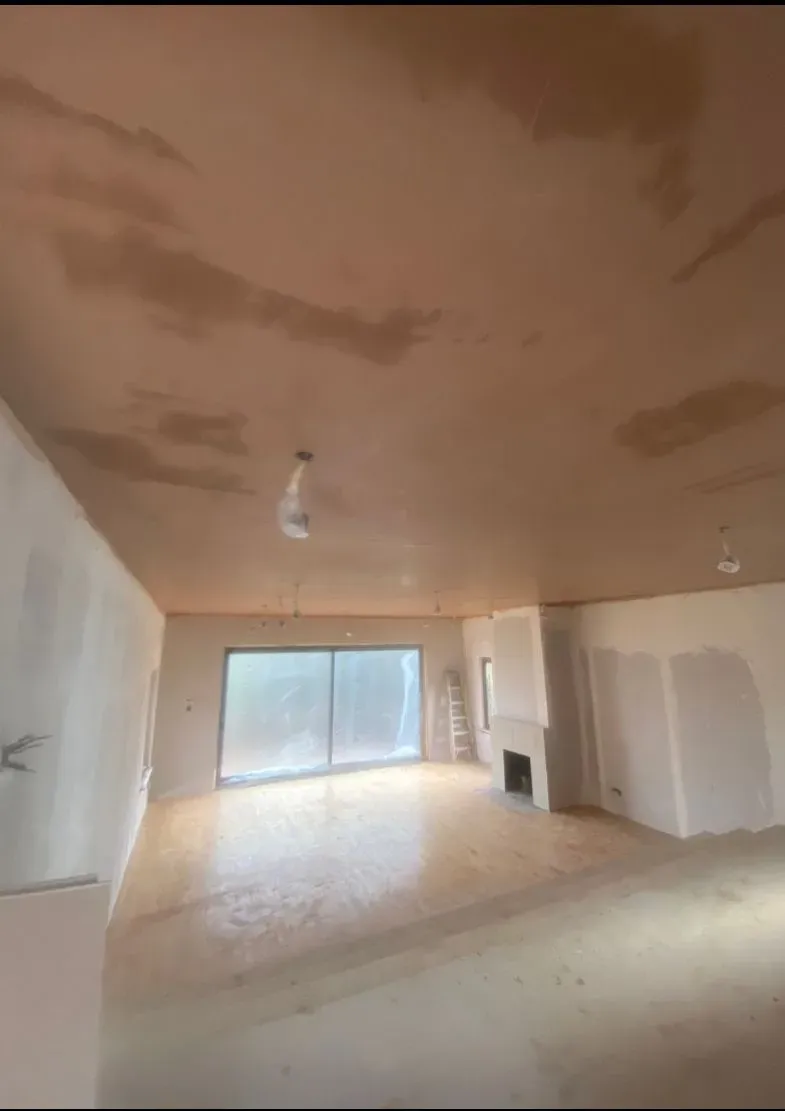
Boarding and finishing as one job
Most people want both, and there is a real advantage to one subcontractor doing them. The boarding goes up knowing exactly what has to go over it, the joints land where they should, and there is nobody to blame at the handover between the two operations.
For the finishing side on its own, see plastering and skimming. For contract and new build work across multiple plots, see commercial and trade plastering.
Our work
Plasterboarding & Dry Lining we have done
Real jobs in real houses across the area. Fresh plaster looks pink or brown until it dries out.
Our process
How the job actually runs
Dry lining is drier and quicker than wet plastering, which changes the timescales but not the order. Here is how a job runs.
No competitor publishes this, which tells you how often people are left guessing.
-
Survey
We come out and look at the job properly. Measuring up, checking what is behind the existing surface, and asking what you want the finished room to do.
-
Written quote
You get the price in writing with the work set out line by line. If anything could change it once we open the surface up, you hear about it before we start rather than after.
-
Prep and protection
Floors covered, furniture sheeted or moved out, doorways sealed. Plastering makes dust, and the difference between a tidy job and a mess is decided before any material is mixed.
-
The work
Boarding, bonding and finish coats worked in order, each one given the time it needs. You will know which rooms are in use and which are not on any given day.
-
Drying time
Fresh plaster has to dry before it can be painted. We tell you roughly how long to leave it, what it should look like as it goes off, and what to do if it dries patchy.
-
Clean up
Waste taken away, floors vacuumed, everything put back. The job is not finished when the plastering stops, it is finished when you have got your room back.
FAQs
Questions people ask
What is the difference between dry lining and plastering?
Dry lining fixes plasterboard to the wall and finishes the joints. Traditional plastering applies wet material directly to the wall. Dry lining is faster, adds almost no moisture to the building and can take insulation behind it. Wet plaster suits solid walls and gives a harder, more solid surface.
Dot and dab or a stud wall, which do I need?
Dot and dab bonds board to an existing solid wall, so you keep the wall and gain a flat surface. A stud wall is a new wall built from timber or metal and boarded both sides. If you are covering something, that is dot and dab. If you are dividing something, that is a stud wall.
Can you insulate at the same time?
Yes. Insulated plasterboard puts the insulation and the finished surface on in one pass, which is usually the cheapest way to warm up a cold external wall in an existing house. It does take a little off the room size, and we will tell you how much before you commit.
Do you skim the boards or just tape them?
Either. Taping and jointing finishes the seams only and is common on new build and commercial jobs. A full skim gives a smoother, more even surface across the whole wall and is what most homeowners expect. We quote both if you are not sure which you want.
Related work
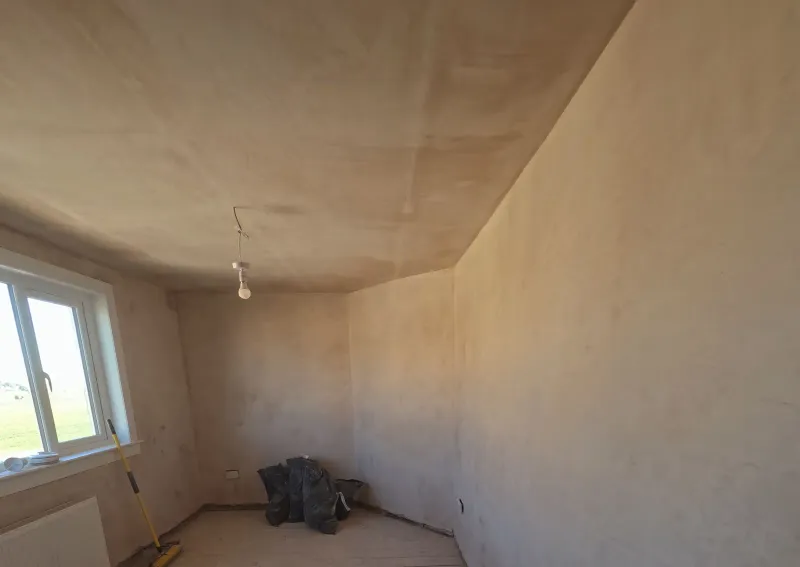
Plastering & Skimming
Skimming over existing walls, fresh plaster onto new board, and re-skimming tired surfaces to leave a flat finish ready for paint.
Plastering & Skimming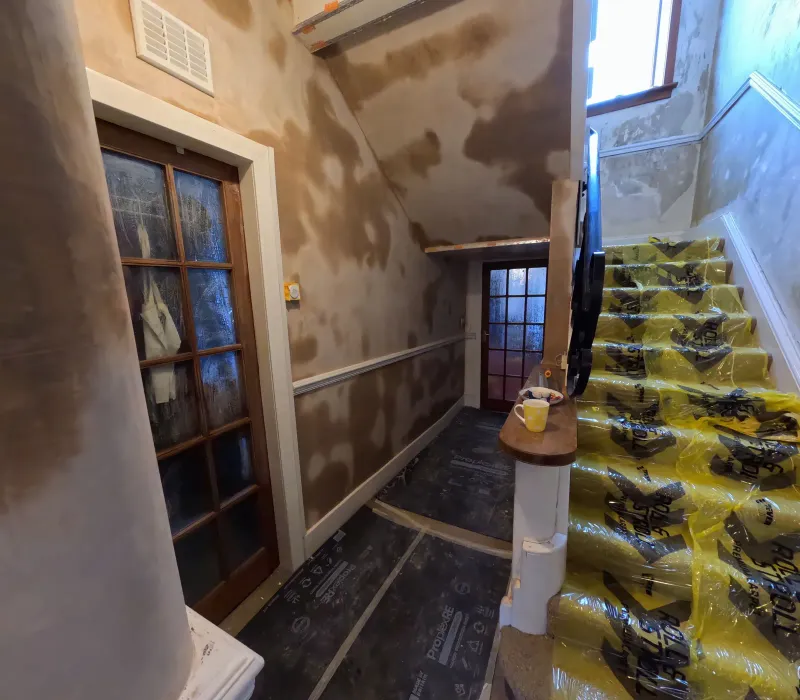
Commercial Plastering & Trade Partnerships
Contract plastering for builders, developers and letting agents. New build, refurbishment, void turnarounds and boarding packages.
Commercial & Trade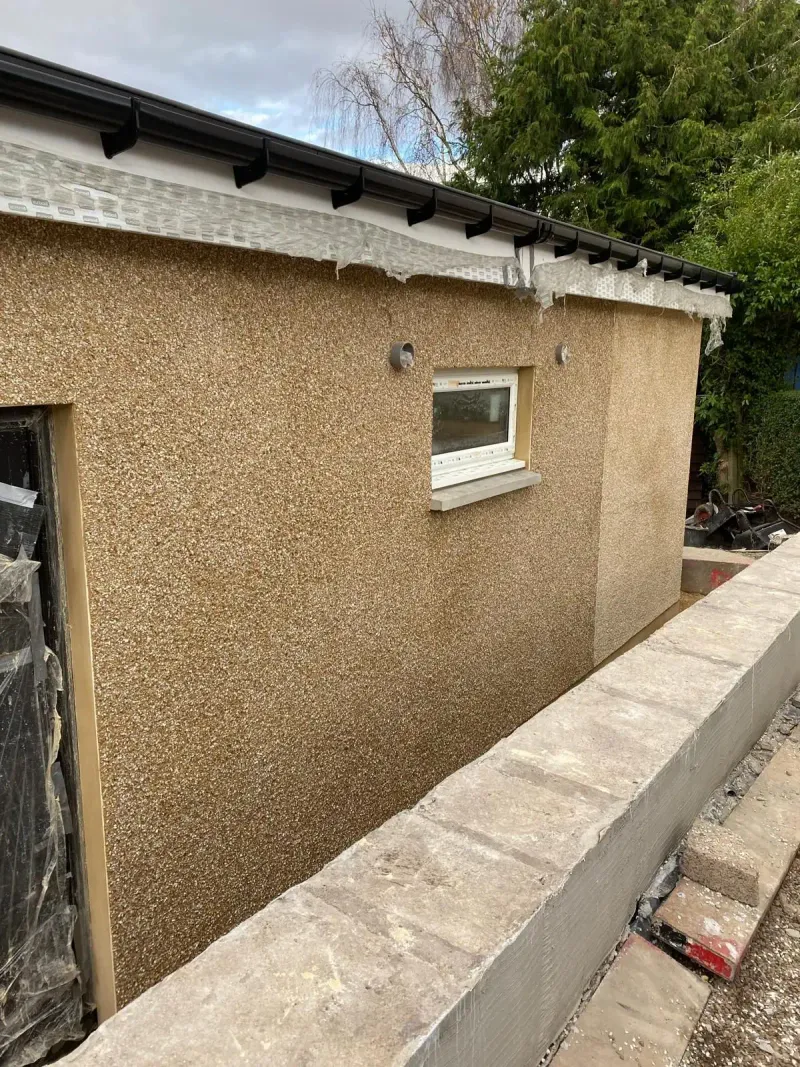
Rendering & Harling
External render, harling and roughcasting, wet dash, and repairs to failed or cracked sections on older Scottish properties.
Rendering & Harling
Need a plasterer in Falkirk?
Send over what needs doing, with a photo if you have one, and you will get a price back. No charge for the quote and no pressure after it.
Rather talk? 07821 809043 or WhatsApp (opens in new tab)