
Ceiling Plastering & Repairs in Falkirk
Cracked, sagging and tired ceilings put right across Falkirk and Central Scotland, including the lath and plaster in older properties. Repaired, overboarded, or taken down and reboarded, whichever yours actually needs. Overboarding makes a fraction of the mess of a strip-out, which matters when you are living in the house.
Rather talk? 07821 809043 or WhatsApp (opens in new tab)
Get a free quote
Tell us what needs doing and you will get a price back. No charge and no pressure.
The work
What is actually involved
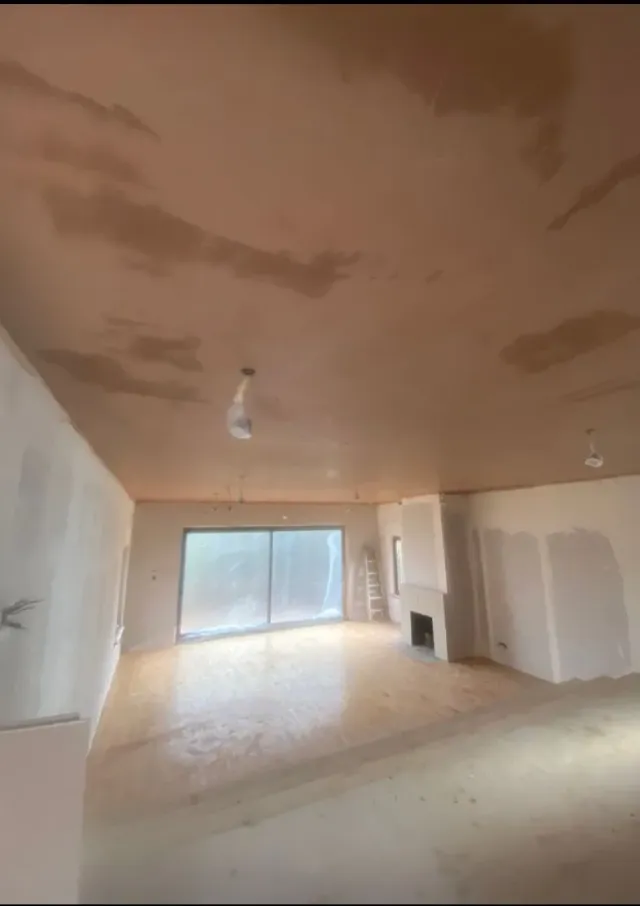
Re-skimming ceilings that are sound underneath but have had it on the surface. A finish coat across the whole ceiling, flat and ready to paint.
Lath and plaster repairs on Victorian and pre-war properties, which is most of the older housing stock around Falkirk and Stirling. Where the original is worth saving we save it.
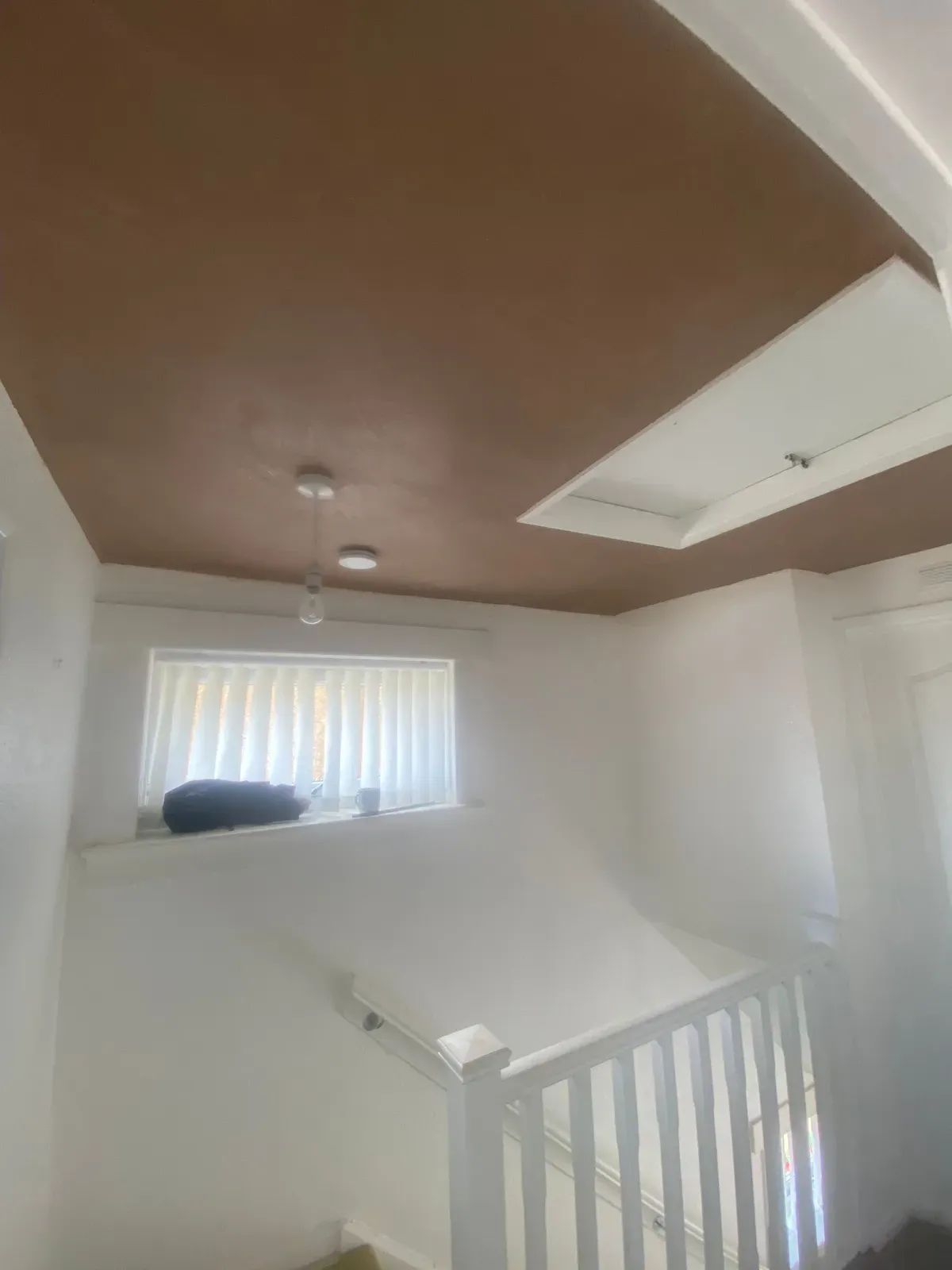
Overboarding, where new plasterboard goes up under the existing ceiling and is then skimmed. Faster and far less mess than pulling an old ceiling down, and often the right answer.
Taking a ceiling down and reboarding where the original has gone too far to keep.
Cracked ceilings raked out and repaired properly rather than filled and painted over.
Water damage from a leak or a bathroom above, cut out and made good once the leak itself has been dealt with.
Sound familiar?
When you need ceiling plastering & repairs
If any of these describe your place, this is the job you are looking for.
The ceiling is bowing or sagging in the middle
Cracks are spreading rather than staying still
A leak from above has stained or blown a section
The ceiling sounds hollow, or bits come away when it is touched
An old lath and plaster ceiling is cracking along the laths
You want an artex ceiling gone and made smooth
Older Scottish houses, older ceilings
Much of the housing around Falkirk, Stirling and the surrounding towns is Victorian, Edwardian or pre-war, and a lot of it still has its original ceilings. That means lath and plaster: thin timber strips nailed across the joists, with plaster pushed through the gaps so it squeezes out behind and hardens into keys that hold the whole thing up.
It is a good system and it lasts a century or more. What eventually fails is not usually the plaster face but those keys. They snap, the ceiling loses its grip on the laths, and it starts to sag under its own weight. Old lath and plaster is heavy, which is why a bowing ceiling is worth looking at soon rather than eventually.
How to tell what you are looking at
- Fine cracks that stay put are usually seasonal movement and cosmetic
- Cracks running in parallel lines follow the laths, which means keys are going
- A hollow sound over a wide area means it has already let go behind
- Visible bowing or dust falling is the one not to leave
If you are not sure, send a photo. It is usually obvious from one.
Repair, overboard, or take it down
Three options, and the right one depends on how far gone it is.
Repair suits a ceiling that is largely sound with failure in patches. If the laths are solid and only sections of plaster have gone, cutting those out and making good is cheaper and far less disruptive than replacement. It is also the right call in a room with cornice or a ceiling rose worth keeping, because those rarely survive a strip-out.
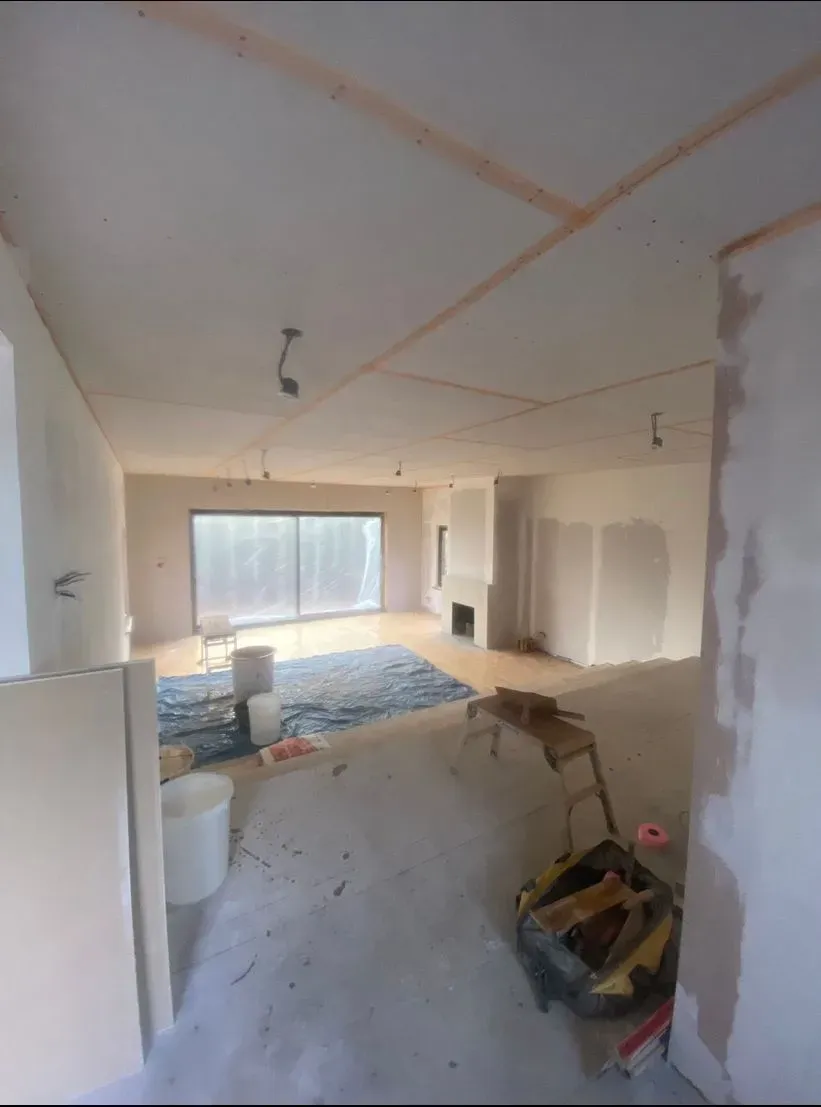
Overboarding fixes new plasterboard underneath the existing ceiling, which is then skimmed. It is quicker than a strip-out, makes a fraction of the mess, and works whenever the old ceiling is still firmly attached. For most people living in the house while the work happens, this is the deciding factor.
Taking it down is right when the ceiling is loose across the whole area, badly sagging, or when you need access to what is above it for wiring, insulation or pipework. It is the messiest option by a distance and we will only recommend it when the other two will not do.
Ceilings after a leak
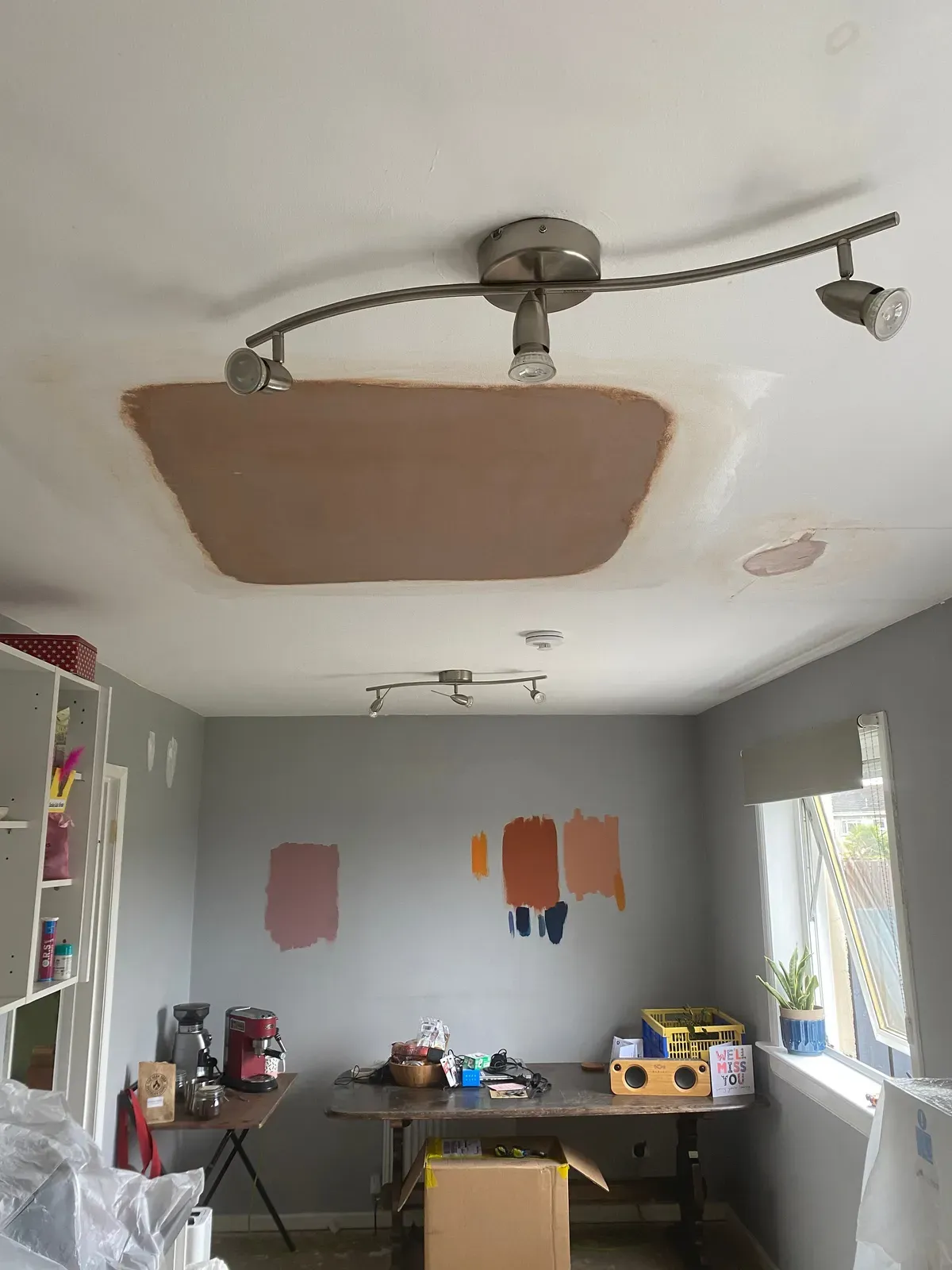
Water damage from a bathroom above or a failed roof is one of the most common reasons people ring. The plaster blows, stains come through paint no matter how many coats go on, and the affected area sounds hollow.
The sequence matters here: the leak gets fixed first. New plaster over an active leak will blow again, usually within months, and the second repair costs the same as the first. We will say so even when it means the job waits, because the alternative is taking money for work that is going to fail.
Once it is dry and the cause is sorted, the damaged section comes out and gets made good.
Mess, and how much of it
Ceilings are the messiest part of plastering, which is why the preparation matters more here than anywhere else. The room is emptied or fully sheeted, floors covered, doorways sealed before anything starts.
Overboarding makes considerably less mess than pulling a ceiling down. If you are weighing the two and living in the house, that difference is usually worth more than the money.
For textured ceilings specifically, see artex ceilings. If the walls are coming back at the same time, plastering and skimming covers that, and there are finished ceilings to look at in the gallery.
Our work
Ceiling Plastering & Repairs we have done
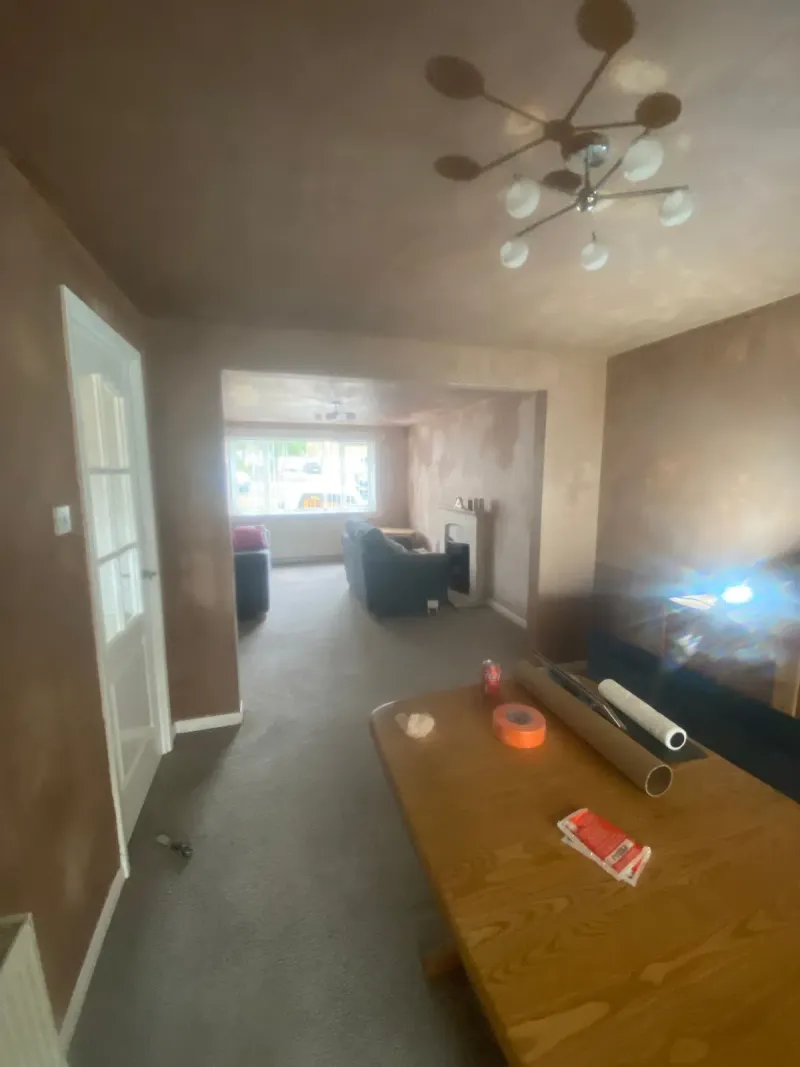
Real jobs in real houses across the area. Fresh plaster looks pink or brown until it dries out.
Before After
Our process
How the job actually runs
Ceilings are the messiest part of plastering and the part people worry about most. Here is how a job actually runs.
No competitor publishes this, which tells you how often people are left guessing.
-
Survey
We come out and look at the job properly. Measuring up, checking what is behind the existing surface, and asking what you want the finished room to do.
-
Written quote
You get the price in writing with the work set out line by line. If anything could change it once we open the surface up, you hear about it before we start rather than after.
-
Prep and protection
Floors covered, furniture sheeted or moved out, doorways sealed. Plastering makes dust, and the difference between a tidy job and a mess is decided before any material is mixed.
-
The work
Boarding, bonding and finish coats worked in order, each one given the time it needs. You will know which rooms are in use and which are not on any given day.
-
Drying time
Fresh plaster has to dry before it can be painted. We tell you roughly how long to leave it, what it should look like as it goes off, and what to do if it dries patchy.
-
Clean up
Waste taken away, floors vacuumed, everything put back. The job is not finished when the plastering stops, it is finished when you have got your room back.
FAQs
Questions people ask
Is a sagging ceiling dangerous?
It can be. A ceiling that is bowing, sounds hollow over a wide area, or is dropping debris has lost its key and should be looked at soon rather than eventually. Old lath and plaster is heavy. If it is sagging and you can see cracks running with the laths, do not leave it.
Is a lath and plaster ceiling worth repairing?
Often yes, especially in an older property where the ceiling has cornice or a rose worth keeping. If the laths are sound and only the plaster has failed in places, repair is cheaper and less disruptive than replacement. Once the laths themselves are going, reboarding is the better spend.
Should I overboard or take the ceiling down?
Overboarding is quicker, far less mess and usually cheaper, and it works where the existing ceiling is still firmly attached. Taking it down is the right call if the old ceiling is loose, badly sagging, or you need access to what is above it. We will say which yours needs.
How much mess does a ceiling make?
More than walls, which is why the prep matters more. The room is emptied or sheeted completely, floors covered and doorways sealed before anything starts. Overboarding makes considerably less mess than pulling a ceiling down, and that is often the deciding factor for people living in the house.
Related work
Artex Ceilings
Dated textured ceilings covered over and finished smooth, either overboarded or skimmed, ready for decorating.
Artex Ceilings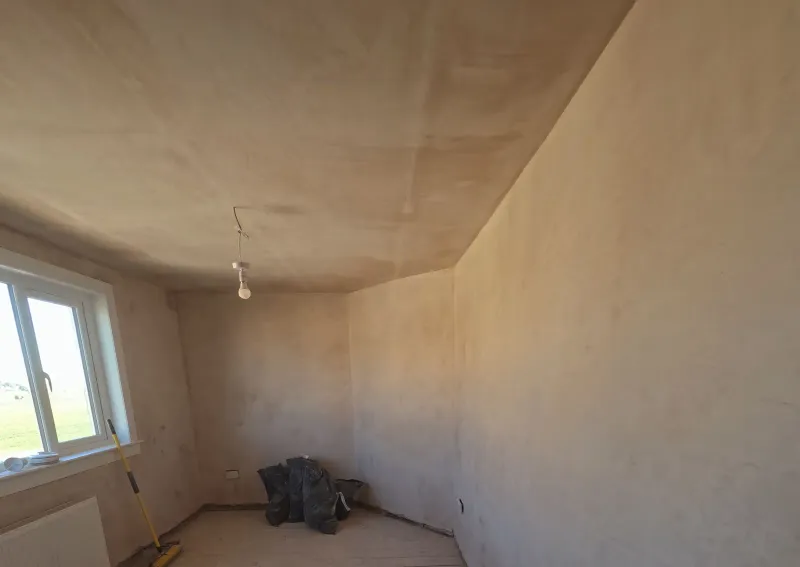
Plastering & Skimming
Skimming over existing walls, fresh plaster onto new board, and re-skimming tired surfaces to leave a flat finish ready for paint.
Plastering & Skimming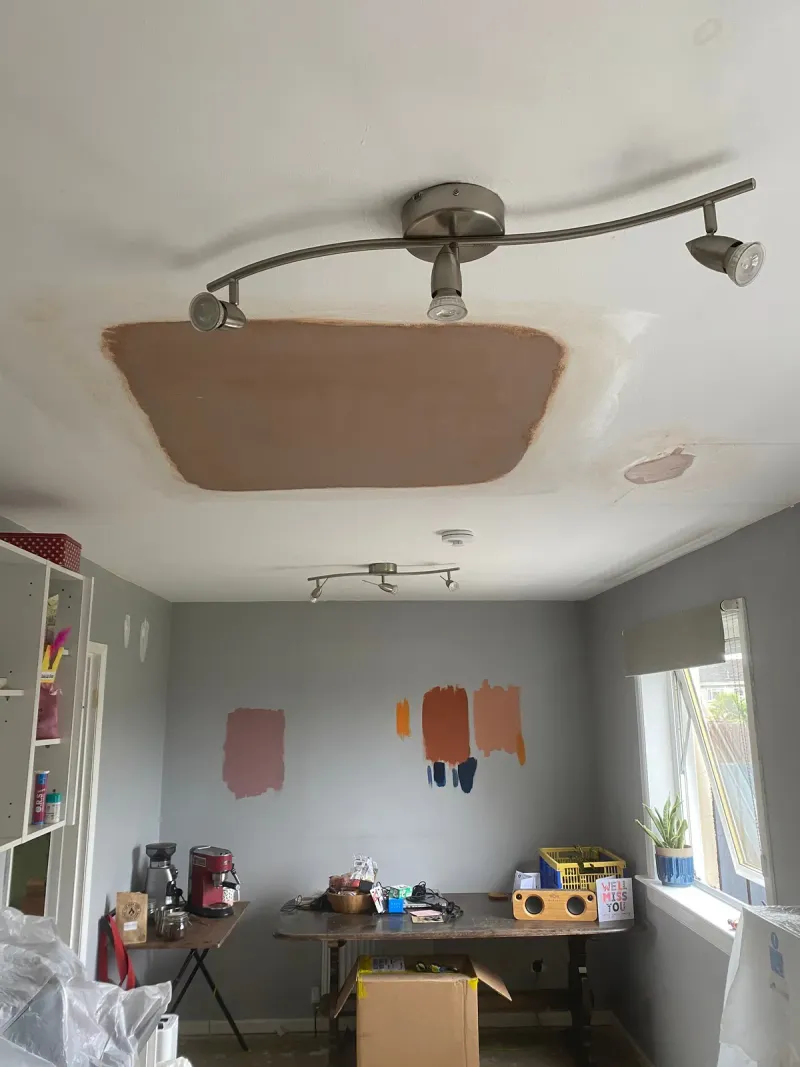
Plaster Repairs
Cracks, holes, blown and hollow plaster and damp-damaged sections patched and made invisible. No job too small.
Plaster Repairs
Need a plasterer in Falkirk?
Send over what needs doing, with a photo if you have one, and you will get a price back. No charge for the quote and no pressure after it.
Rather talk? 07821 809043 or WhatsApp (opens in new tab)